
Understanding Laravel Service Providers: A Beginner Friendly Guide
When developers begin learning Laravel, they naturally spend most of their time working with the parts of the framework they can immediately see. They create routes, build controllers, design Blade templates, define models, and interact with databases through Eloquent. Every new feature feels surprisingly easy to use, and this simplicity is one of the main reasons Laravel has become one of the most loved PHP frameworks in the world. It allows beginners to become productive very quickly without requiring them to understand every internal component from the very beginning. For small projects, this experience feels almost effortless, and many developers continue building applications without ever wondering what happens behind the scenes before their own code starts running.
That curiosity usually appears later. After completing a few projects, developers begin to notice that Laravel seems to prepare everything automatically. Authentication is already available. Database connections work immediately. Sessions start without additional configuration. Validation, caching, logging, queues, notifications, localization, and many other services all seem ready before the first line of application code is executed. At first glance, it almost feels like Laravel performs some kind of magic, but every feature is actually the result of a carefully designed startup process that takes place every single time the application receives a request.
This is where Laravel Service Providers enter the picture.
Although the name sounds technical, Service Providers are not an advanced feature reserved only for experienced Laravel developers. In reality, they form one of the foundations of the framework. They help Laravel organize the way it prepares the application, ensuring that every service is configured before controllers, routes, models, or middleware begin doing their work. Once you understand this idea, many other concepts that initially seem unrelated suddenly begin connecting together. Topics such as dependency injection, the Service Container, package development, configuration, and even application performance all become much easier to understand because they share the same underlying startup philosophy.
If you have already explored What Is Laravel Eloquent? Understanding Models and Laravel's ORM, you probably noticed that Eloquent is immediately available whenever you create a new project. You never need to manually initialize the ORM before writing your first database query because Laravel has already completed that work during the application's startup process. The same principle applies to almost every major feature inside the framework. Understanding Service Providers therefore isn't simply about learning one Laravel component—it's about understanding how the entire framework prepares itself before your own code begins executing.
What Are Laravel Service Providers?
Imagine arriving at a large company headquarters early in the morning. Before employees even unlock their computers, countless preparations have already taken place. Security systems have been activated, electricity is running throughout the building, meeting rooms are prepared, internet connections are working, printers are online, and every department is ready for another working day. Employees rarely think about these preparations because everything simply works the moment they arrive.
Laravel follows exactly the same philosophy.
Whenever someone visits your website, Laravel doesn't immediately execute a route or call a controller. Instead, the framework begins preparing the application itself. Configuration files are loaded, environment settings become available, framework services are registered, packages initialize themselves, and every important component is made ready before the first request reaches your application logic. This preparation happens so quickly that developers rarely notice it, yet it is one of the most important reasons Laravel feels reliable and consistent.
Service Providers are responsible for organizing much of this preparation. Instead of placing all startup logic inside one enormous file containing thousands of lines of configuration, Laravel divides responsibilities into multiple providers. Each provider focuses on a specific area of the framework, making the startup process easier to understand, maintain, and extend. As your applications become larger, this organization becomes increasingly valuable because every responsibility already has its own dedicated place instead of being scattered throughout the project.
Another advantage of this architecture is flexibility. Laravel itself uses Service Providers internally, but developers can also create their own whenever their applications require additional startup logic. This allows projects to grow naturally without becoming difficult to maintain. Rather than modifying Laravel's core files or placing initialization logic inside controllers, developers can register new services in an organized and predictable way.
Why Service Providers Matter More Than Most Beginners Realize
One of the biggest misconceptions beginners have is believing that Service Providers are only useful when building Laravel packages or extremely large enterprise applications. Since many tutorials introduce them later in the learning journey, developers often assume they can safely ignore the topic until they become more experienced.
The reality is very different.
Every Laravel application depends on Service Providers from the moment it starts running. Even the smallest "Hello World" project relies on them because Laravel itself cannot function correctly without preparing its core services first. Database connections must be available before models communicate with the database. Authentication must already be configured before users can log in. Sessions need to start before Laravel can remember information between requests. Validation must already exist before forms can be processed correctly.
Imagine trying to remove every Service Provider from Laravel.
Your application would lose access to many of the framework's most important capabilities. Authentication would fail, sessions would never start, logging would stop recording events, caching systems would not initialize, and numerous packages would never become available. In other words, Laravel would no longer feel like Laravel.
This demonstrates an important lesson for every beginner. Service Providers are not an optional feature added for convenience. They represent part of Laravel's foundation, quietly preparing the environment so developers can focus on solving business problems instead of worrying about framework initialization.
Understanding this idea also changes the way you think about Laravel itself. Instead of seeing controllers, models, middleware, and validation as isolated features, you begin recognizing that they all participate in the same application lifecycle. Everything starts with Laravel preparing the environment, and Service Providers are one of the primary tools used to accomplish that goal.
How Laravel Starts Every Request
Most Laravel tutorials begin with routes because they provide immediate visual results. You create a route, refresh your browser, and instantly see the output. While this teaching approach is excellent for beginners, it also hides an important part of the framework's behavior.
A browser request does not immediately arrive inside your controller.
Before Laravel even considers executing your application logic, it performs a complete startup sequence. During this sequence, configuration files are loaded, environment variables become available, installed packages register themselves, core framework services are initialized, and the application prepares everything it will need during the remainder of the request. Only after this preparation is complete does Laravel continue toward routing, middleware, controllers, and finally the response returned to the browser.
This startup sequence is commonly known as the Laravel Boot Process, and it represents one of the reasons Laravel applications remain so consistent regardless of their size. Whether your project contains ten routes or ten thousand, Laravel follows the same organized startup philosophy before executing your code.
Understanding this process also helps explain why adding new packages to Laravel often feels effortless. Instead of asking developers to manually edit dozens of framework files, packages simply register themselves during the application's startup. Laravel already knows how to prepare them because its architecture was designed around this idea from the very beginning.
The Most Important Service Providers
When developers first hear about Service Providers, they often imagine that Laravel relies on a single provider responsible for preparing the entire framework. In reality, Laravel is built around multiple Service Providers, each designed to handle a specific responsibility during the application's startup. This separation allows the framework to remain clean, organized, and easy to extend, even as applications become significantly larger over time.
Some Service Providers prepare the database layer so Eloquent models can communicate with your database immediately. Others configure authentication, making it possible for users to sign in without developers manually initializing every authentication component. Additional providers prepare sessions, caching, logging, queues, notifications, localization, filesystem drivers, and many other services that modern web applications depend on every day.
This organization follows one of Laravel's core design principles: every component should have a clear responsibility. Instead of collecting thousands of lines of initialization code inside a single startup file, Laravel distributes those responsibilities across dedicated providers. As a result, the framework becomes easier to maintain, packages integrate naturally, and developers can extend applications without modifying Laravel's internal architecture.
The more your application grows, the more valuable this organization becomes. A project containing only a few pages may never require custom Service Providers, but larger applications often benefit from separating startup logic into their own providers, making the codebase cleaner and far easier for teams to understand.
A Real-World Example
Imagine opening a large shopping mall early in the morning. Long before customers walk through the entrance, an enormous amount of preparation has already taken place. The lights are on, security systems have completed their checks, payment terminals are connected, escalators are running, stores have arranged their products, and every employee is ready to welcome visitors. Customers never think about these preparations because everything simply works the moment they arrive. Laravel follows exactly the same philosophy. Before your application responds to a request, the framework spends time preparing every important service so your own code can execute in a stable and predictable environment.
Understanding the Laravel Application Lifecycle
Every request sent to a Laravel application follows the same carefully organized journey, even though most developers never notice it happening. From the user's perspective, the process seems almost instantaneous—a visitor opens a page, clicks a button, or submits a form, and the application immediately responds. Behind the scenes, however, Laravel performs a remarkable amount of work before your own code ever begins executing.
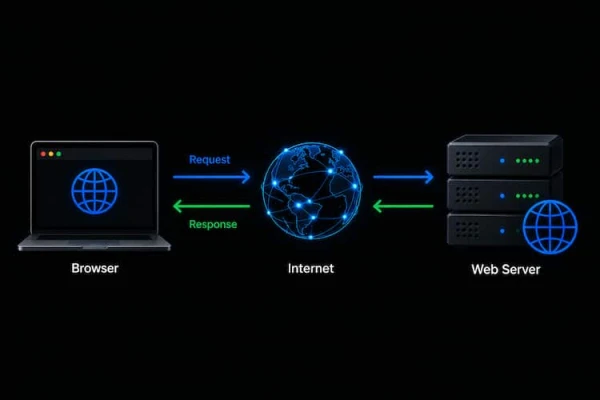
The journey starts the moment a browser sends an HTTP request to your application. Rather than jumping directly into your routes or controllers, Laravel first prepares the entire environment. Configuration files are loaded, environment variables become available, installed packages register themselves, and Laravel Service Providers initialize the framework's core services. Database connections, authentication, sessions, caching, logging, and many other components are all prepared during this startup phase, ensuring the application has everything it needs before handling the request.
Only after these preparations are complete does Laravel continue through the rest of its request lifecycle. The framework matches the request to the correct route, passes it through any registered middleware, executes the appropriate controller, communicates with models when necessary, renders a view or returns a JSON response, and finally sends the completed response back to the user's browser.
This complete journey is known as the Laravel Application Lifecycle. Understanding it helps explain why Laravel feels so reliable and consistent, regardless of whether your application contains a handful of pages or thousands of routes. Every request follows the same well-defined sequence, allowing the framework to prepare its services in a predictable and organized way instead of improvising each time a visitor accesses your website.
As you continue learning Laravel, you'll discover that many advanced concepts—including middleware, dependency injection, events, queues, and package development—are all connected to different stages of this lifecycle. Once you understand how a request moves through the framework, these topics become much easier to learn because they are no longer isolated features but parts of one carefully designed system.
Service Provider vs Service Container
One of the questions almost every beginner asks is:
If Service Providers prepare services, what exactly does the Service Container do?
The easiest way to understand the difference is to imagine a modern warehouse.
Workers receive products, organize them, label them, and place them on shelves. The warehouse itself stores those products until someone needs them.
Laravel follows the same idea.
A Service Provider prepares and registers a service during the application's startup.
The Service Container stores that service and provides it whenever another part of the application requests it.
Neither replaces the other.
Instead, they work together as two parts of the same system. Service Providers focus on preparation, while the Service Container focuses on storing and resolving services throughout the application's lifetime.
Many beginners confuse these concepts because they appear together in Laravel documentation. Once you understand that one is responsible for registration and the other for resolution, the relationship becomes much easier to understand.
How Dependency Injection Fits Into the Picture
Another Laravel concept that becomes much easier after understanding Service Providers is Dependency Injection.
Rather than creating every object manually, Laravel automatically provides the services your classes require. This is possible because those services have already been registered during the application's startup process.
Imagine hiring a new employee at a company.
Instead of asking the employee to purchase a computer, install software, configure internet access, and prepare their own office, the company provides everything before the employee starts working.
Laravel applies the same philosophy.
When your application needs a service, the framework already knows how to provide it because Service Providers prepared it earlier. This approach keeps code cleaner, reduces duplication, simplifies testing, and makes large applications much easier to maintain.
Understanding this relationship also prepares you for more advanced Laravel concepts that build upon the same architectural foundation.
Common Mistakes Beginners Make
Almost every Laravel developer misunderstands Service Providers at some point, and that's completely normal. The topic appears more complicated than it actually is because most developers encounter it before understanding Laravel's overall architecture.
One common mistake is believing Service Providers are only useful when creating packages. In reality, Laravel itself depends on them every time the application starts.
Another mistake is confusing Service Providers with the Service Container. Although they work together, they perform different jobs and should not be treated as interchangeable concepts.
Some developers also place startup logic inside controllers, routes, or middleware simply because those files feel familiar. While the application may continue working, this approach gradually makes projects more difficult to organize and maintain. Laravel encourages developers to keep initialization responsibilities inside Service Providers so every component remains focused on its own responsibility.
Finally, many beginners postpone learning Service Providers because the topic sounds advanced. Ironically, understanding this single concept often makes the rest of Laravel significantly easier to learn.
Best Practices
As your Laravel projects continue growing, maintaining a clean architecture becomes increasingly important. Service Providers help achieve that goal by separating application initialization from business logic, allowing every part of the framework to focus on a single responsibility.
Whenever you create custom Service Providers, keep them focused on one purpose instead of combining unrelated functionality into the same class. Organize startup logic clearly, use descriptive names, and avoid turning Service Providers into places for business rules or application workflows. Their responsibility is to prepare the application—not to run it.
Following these simple practices keeps projects easier to understand, especially when multiple developers collaborate on the same codebase. Months later, you'll spend less time searching for configuration logic and more time building new features.
Frequently Asked Questions
What are Laravel Service Providers?
Laravel Service Providers are the central location where the framework registers and prepares services before the application begins processing requests.
Do all Laravel applications use Service Providers?
Yes. Every Laravel application depends on Service Providers because the framework itself relies on them during startup.
Are Service Providers only for large projects?
No. Even the smallest Laravel application uses Service Providers behind the scenes. Larger projects simply make greater use of custom providers.
What's the difference between a Service Provider and the Service Container?
A Service Provider registers services during startup, while the Service Container stores and resolves those services whenever the application needs them.
Should beginners learn Service Providers?
Absolutely. Although the topic appears advanced, understanding it provides a much stronger foundation for learning middleware, dependency injection, package development, and Laravel's internal architecture.
Conclusion
When developers first start using Laravel, it's easy to focus only on the features that are immediately visible—routes, controllers, models, and views. As your experience grows, however, you begin to realize that the framework's real strength lies in everything happening behind the scenes before your own code is ever executed. Laravel Service Providers are one of the key reasons this experience feels so seamless, quietly preparing the application and ensuring every essential service is ready before each request is processed.
Understanding Service Providers also changes the way you view Laravel's architecture. Instead of seeing features like authentication, caching, sessions, or validation as separate components, you begin to recognize that they all participate in the same startup process. This broader perspective makes advanced concepts such as the Laravel Application Lifecycle, the Service Container, and Dependency Injection far easier to understand because they are all connected pieces of the same architectural design.
Learning about Service Providers is not the final step in mastering Laravel—it's the beginning of understanding how the framework truly works. Once this foundation is clear, you'll find it much easier to explore more advanced topics and build applications that are cleaner, more maintainable, and easier to scale. To continue expanding your Laravel knowledge, you may also enjoy reading:
What Is Laravel Eloquent? Understanding Models and Laravel's ORM
Laravel Relationships Explained: One-to-One, One-to-Many, and Many-to-Many
Understanding Laravel Middleware
where you'll discover how these concepts work together to create modern, well-structured Laravel applications.









































Discussion 0