Laravel Login Not Working? (Session, CSRF, Redirect Fix Guide)
Quick Fix (If your Laravel login is not working)
If your Laravel login is not working even though everything looks correct, the problem is almost always one of these:
- Session not persisting
- CSRF token missing or invalid
- Cookies not being saved
- APP_URL or domain mismatch
- Redirect loop after login
👉 Fix checklist:
- Check `SESSION_DRIVER` in `.env`
- Make sure `@csrf` is in your form
- Clear browser cookies
- Verify `APP_URL` matches your domain
- Check HTTPS / cookie settings
Common Symptoms
- Login redirects back to login page
- User logs in then logs out instantly
- 419 Page Expired error
- Infinite redirect loop
Why this happens
Laravel login doesn’t fail because of your controller or database.
It fails because authentication depends on **sessions + cookies + CSRF working together**.
If any part of this chain breaks, login will silently fail — even if everything looks correct.
Now let’s understand why this actually happens 👇
Few things feel more frustrating than building a login system in Laravel, watching it behave perfectly on your local environment, and then suddenly realizing that something is no longer working the way it should. You enter your credentials, you click login, and instead of moving forward, you are either redirected back, logged out instantly, or faced with an error that does not clearly explain what went wrong. In that moment, it feels as if the system is betraying you, especially because everything looks correct on the surface. The routes are defined, the controller logic is clean, and the database contains the right data, yet the result does not match your expectations.
This situation is extremely common, especially for developers who are still building a deeper understanding of how Laravel manages state and security behind the scenes. Problems like laravel login not working, laravel session not working, and csrf token mismatch laravel are not isolated bugs but rather symptoms of a deeper interaction between multiple parts of the framework. Just like the realization moments you described in your earlier articles such as “Laravel Was Hard Until I Understood This” and “The Exact Moment Laravel Started Making Sense to Me,” this issue is less about fixing a single line of code and more about seeing how the system actually fits together as a whole.
Why Laravel Login Fails Even When Everything Looks Correct

One of the most deceptive aspects of Laravel authentication is that it can fail without throwing any meaningful error, creating the illusion that your code is incorrect when, in reality, the issue lies in how the application maintains state between requests. When a user logs in, Laravel does not simply validate credentials and move on; it creates a session that must persist across multiple HTTP requests, and this persistence is what allows the framework to recognize the user as authenticated. If that session is not stored properly or cannot be retrieved later, Laravel behaves as if the login never happened, even though the credentials were technically correct.
This explains why you might experience situations where the login appears to succeed for a fraction of a second and then immediately fails. The system validates the user, but the state is not maintained, so the next request resets everything. This kind of behavior is very similar to what happens in other Laravel issues you have already explored, such as 👉 Laravel 500 Server Error — Why It Happens After Deploy or During Development— Why It Happens and What It Really Means, where the root cause is often not obvious from the surface but becomes clear once you understand how the framework interacts with its environment.
How Session, Cookies, and CSRF Work Together to Control Login

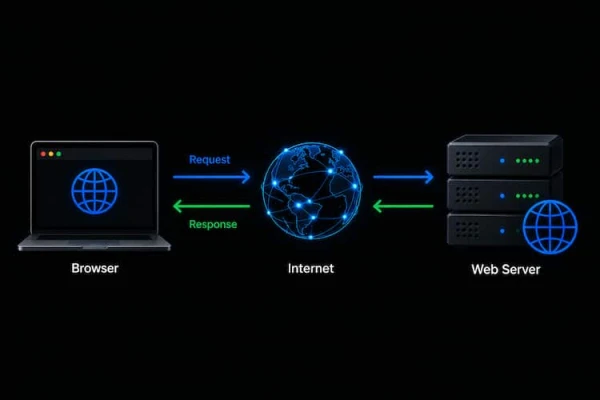
To truly understand why laravel authentication not working problems occur, you need to stop thinking of login as a single action and start seeing it as a chain of interconnected systems that must all function correctly. When a user submits a login form, Laravel first verifies the credentials, then creates a session entry on the server, and finally sends a cookie to the browser that acts as a reference to that session. On subsequent requests, the browser sends that cookie back, allowing Laravel to retrieve the session data and confirm that the user is still authenticated.
At the same time, Laravel enforces CSRF protection to ensure that the request itself is legitimate and not forged by an external source. If the CSRF token is missing or invalid, Laravel blocks the request before authentication even has a chance to succeed. This is why issues like 👉 How to Fix the 419 Page Expired Error in Laravel (Beginner-Friendly Guide) – Fix CSRF Error Easily are so closely related to login failures. The system is not rejecting your credentials; it is rejecting the request itself before it reaches the authentication logic.
When you look at login through this lens, it becomes clear that any break in this chain—whether in session storage, cookie handling, or CSRF validation—can cause the entire process to fail, even though each individual component might seem correct in isolation.
Why Login Works on Localhost but Breaks on Production

One of the most confusing transitions in a developer’s journey happens when an application that works flawlessly on localhost suddenly behaves unpredictably after deployment. This is not because Laravel changes, but because the environment changes in ways that directly affect how sessions and cookies are handled. On a local machine, you typically have a very permissive setup where file permissions, domain handling, and security settings are relaxed, allowing Laravel to manage sessions without much resistance.
On a production server, especially in shared hosting environments, the situation is very different. Domain configurations, HTTPS enforcement, cookie security settings, and session storage paths all become critical factors that can influence whether login works or fails. This is the same pattern you encountered in 👉 Laravel Storage:link Not Working on cPanel (Images Missing After Deploy), where the code remained unchanged but the environment introduced new constraints that affected behavior.
For example, if your session cookie is not configured to work with HTTPS, or if your domain settings do not match the actual URL of your application, the browser may silently refuse to store or send the cookie. As a result, Laravel cannot retrieve the session, and the user appears to be logged out on every request.
The Real Causes Behind Laravel Login Redirect Loops

Redirect loops are among the most confusing login-related issues because they create a paradox where the application appears to be working and failing at the same time. You log in, Laravel processes the request, and then instead of taking you to your intended destination, it redirects you back to the login page, making it seem as though the authentication failed. In reality, what often happens is that the authentication succeeds, but the session is not recognized on the next request, causing Laravel’s middleware to treat the user as a guest again.
This behavior is deeply tied to how Laravel’s authentication guards and middleware interact with session data. If the guard configuration does not match the way your application handles users, or if the middleware is applied incorrectly, the system may continuously redirect authenticated users as if they were not logged in. This kind of structural issue is very similar to what you explored in 👉 Laravel Target Class Does Not Exist — Why the Controller Exists but Laravel Cannot See It, where the framework fails to resolve something that technically exists because the configuration or context is incorrect.
Understanding redirect loops requires you to think beyond individual routes and consider how requests flow through the entire application lifecycle, from the moment the user submits a form to the moment Laravel decides whether they are authenticated or not.
A Structured Way to Debug Laravel Login Problems Without Guessing

When faced with a login issue, the worst thing you can do is start randomly changing configuration values or copying solutions from different sources without understanding their purpose. A more effective approach is to follow a structured debugging process that focuses on isolating each part of the authentication chain. Start by confirming that the login request itself is valid and includes a proper CSRF token, then verify that the session is being created and stored correctly, and finally ensure that the browser is receiving and returning the session cookie as expected.
By breaking the problem down into these layers, you transform a confusing issue into a series of smaller, manageable checks. This method not only helps you fix the current problem but also builds a mental framework that you can reuse in future debugging scenarios. Over time, this approach becomes second nature, allowing you to diagnose issues quickly and confidently instead of feeling lost or overwhelmed.
At first glance, a login failure might seem like a small and annoying bug, but it actually reveals something much deeper about the nature of web development. It teaches you that applications are not just collections of code but systems that depend on environments, configurations, and invisible processes such as session management and browser behavior. It reminds you that success on localhost does not guarantee success in production, and that understanding the “why” behind a problem is far more valuable than simply memorizing the “how” of a fix.
This realization is very similar to the turning points you described in your personal articles, where confusion gradually transforms into clarity as you begin to see patterns instead of isolated problems. Laravel login issues, like many other challenges in your journey, are not obstacles meant to stop you but opportunities to deepen your understanding and strengthen your problem-solving mindset. This kind of shift is exactly what you explored in The Exact Moment Laravel Started Making Sense to Me, where everything starts to make sense after enough real experience.
If you're facing multiple issues like session expired, login problems, or CSRF errors, it's better to understand the full picture. Laravel Session & Authentication Errors — Complete Fix Guide
Advanced Cases (Often Missed by Developers)
Even after fixing all the common issues, login can still fail in more advanced scenarios.
These are cases that usually appear only after deployment or in more complex environments.
1. Load Balanced Environments
If your Laravel app is running on multiple servers, login may fail even if everything looks correct.
This happens when:
- Sessions are stored locally (file driver)
- Requests are handled by different servers
- Sticky sessions are not enabled
👉 How to fix it:
- Use a shared session driver like Redis or database
- Enable sticky sessions in your load balancer
2. API vs Web (CSRF Confusion)
CSRF protection applies to traditional web forms.
If you are building an API:
- CSRF is usually not required
- Authentication is handled using tokens (Sanctum, JWT, etc.)
Mixing API logic with web authentication can lead to confusing login issues.
👉 If sessions expire: Laravel Session Expired Error – Causes, Fix, and Prevention Guide









































Discussion 0