
My Journey With Laravel: How This Framework Transformed the Way I Learn, Think, and Build
Learning Laravel was not a straight path from beginner to developer. It was a long process of trying things, making mistakes, returning to concepts I thought I already understood, and slowly discovering how the different parts of a web application fit together. When I first discovered Laravel, I was attracted by its clean structure and by how much developers seemed able to build with it. Authentication systems, dashboards, blogs, APIs, administration panels, and complete business applications could all be created inside the same framework. From the outside, Laravel looked organized and powerful. Once I started learning it, however, I discovered that using a framework and understanding a framework are two very different things.
During my first projects, I could often make something work without being able to explain why it worked. I knew how to create a route because I had seen it in a tutorial. I knew that Artisan could generate a controller, and I knew that models and migrations had something to do with the database. I could create Blade templates and display information on a page. But whenever the application behaved differently from the tutorial I was following, my confidence disappeared. I would look at several files, change something, refresh the browser, undo the change, search for an error online, and continue until something finally worked.
That experience eventually taught me one of the most important lessons of my Laravel learning journey: knowing Laravel commands is not the same as understanding Laravel. Real progress began when I stopped trying to memorize what to type and started trying to understand what Laravel was doing with each request. Once I began seeing routes, controllers, models, views, migrations, validation, and middleware as parts of the same system, the framework became much less mysterious.
This article brings together the most important parts of that journey: why I chose Laravel, why it was difficult in the beginning, the mistakes that slowed me down, the moment the framework finally started making sense, what building real applications taught me, and what I would do differently if I were learning Laravel again today.
Why I Chose Laravel
Before learning Laravel, I understood many of the individual pieces involved in building a website, but I did not always understand how those pieces should be organized into a maintainable application. A website might need PHP code, HTML pages, forms, database queries, authentication, user input, and business logic. It was possible to make those things work, but as a project became larger, simply making something work was no longer enough. I needed to understand where different responsibilities belonged and how professional applications were structured.
Laravel immediately interested me because it offered that structure. Instead of putting database queries, HTML, validation, and application logic wherever they happened to work, Laravel encouraged me to think about different responsibilities. Routes could define how users enter the application. Controllers could handle requests and coordinate actions. Models could represent and interact with application data. Blade views could be responsible for presentation, while migrations could describe how the database itself should evolve. At first these were simply new terms I needed to learn, but over time they became a way of thinking about application architecture.
Another reason I chose Laravel was that it did not force me to solve every common web-development problem from the beginning. The framework already provided systems for routing, validation, authentication, sessions, database access, middleware, queues, caching, and many other tasks. This allowed me to focus on understanding how applications work rather than repeatedly rebuilding basic infrastructure. At the same time, Laravel was not useful simply because it could save time. What interested me more was that it exposed me to patterns and ideas that are important beyond Laravel itself: separation of concerns, dependency management, request lifecycles, relational data, validation, maintainability, and application architecture.
I gradually realized that learning Laravel could teach me much more than the syntax of one PHP framework. It could teach me how to think about web applications as systems. That became one of the main reasons I continued learning even during the periods when Laravel felt much more difficult than I had expected.
What Learning Laravel Was Like at the Beginning
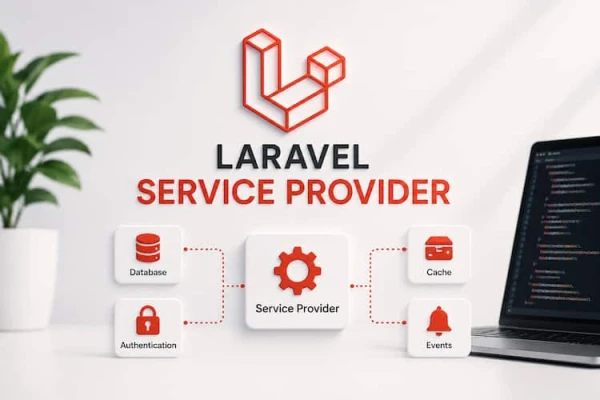
My first experience with Laravel was a mixture of excitement and confusion. Every lesson seemed to introduce another concept: routes, controllers, models, migrations, Blade, Eloquent, middleware, validation, sessions, authentication, service providers, configuration, environment variables, and many more. None of those concepts was impossible to understand individually, but the difficult part was seeing how they were connected.
I might spend one lesson learning how to create routes and another learning how controllers work. Later I would create a model and migration. I could explain each concept in isolation, yet I still did not have a clear mental picture of what happened when someone actually visited a page in my application. This meant that I could follow instructions successfully while still struggling to build independently. If my project behaved exactly like the tutorial, I felt that I understood Laravel. As soon as something different happened, I realized that much of my knowledge depended on remembering steps rather than understanding the system behind those steps.
Real projects made this weakness obvious. A tutorial could tell me to create a specific route, controller method, model, and view, but my own application had different requirements. I had to decide what routes were necessary, how the database should be designed, what relationships existed between models, what input should be validated, and where different pieces of logic belonged. There was no instructor telling me exactly what line to type next.
That was when an important change happened in the way I learned. Instead of asking only, “What code should I write?”, I began asking, “What is Laravel doing with this request?” That second question forced me to understand the path through the application rather than focus only on the final code. It eventually became the foundation of the way I debug Laravel applications as well.
Why Laravel Felt So Difficult
Laravel felt difficult in the beginning partly because I was learning several subjects at the same time without realizing it. Learning Laravel is not only about learning Laravel. The framework sits on top of PHP, HTTP, databases, object-oriented programming, HTML forms, sessions, cookies, security concepts, and web-server behavior. A weakness in any of those foundations can make a Laravel feature look more complicated than it really is.
For example, routes became much easier to understand once I understood HTTP methods and requests. Eloquent relationships became easier when I understood relational databases, primary keys, and foreign keys. Controllers made more sense after I became more comfortable with classes and methods in PHP. Validation became more meaningful when I stopped thinking about it as simply checking form fields and started seeing it as part of controlling what data is allowed to enter the application.
This also explained why debugging initially felt so frustrating. When a form failed, the problem could be in the route, the HTTP method, the controller, validation, CSRF protection, the model, the database, or even the Blade template. Without a mental model of the application, I was effectively guessing. I could search the error message and try solutions, but I did not know how to narrow the problem down systematically.
The turning point was realizing that Laravel itself was not necessarily the reason everything seemed complicated. My mental model was incomplete. Once I accepted that, I stopped treating Laravel features as disconnected chapters that had to be memorized and started looking for the relationships between them.
The Moment Laravel Finally Started Making Sense
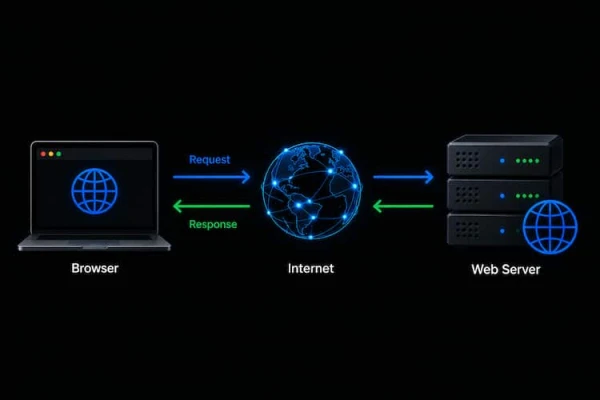
Laravel began to make sense when I learned to follow one request through the entire application. Consider something simple: a visitor opens a page that displays blog posts. The browser sends an HTTP request to the server. Laravel receives that request and checks its routes to determine which part of the application should handle it. The matching route can send the request to a controller. The controller can use a model to retrieve posts from the database, prepare the required data, and pass that data to a Blade view. Blade then renders the page, and the resulting HTML is returned to the browser.
That flow sounds simple once it is understood, but it completely changed the way I saw Laravel. Routes, controllers, models, and views were no longer unrelated files. Each existed because the request needed to move through a particular stage of the application. When something broke, I could follow the same journey and ask where the expected behavior stopped.
Routes: Understanding Where Requests Enter the Application
Routes were one of the first Laravel concepts I encountered, but at first I thought of them mainly as URLs that needed to be written in web.php. With experience, I began to understand that routing is really about deciding how the application responds to a request. A URL is only part of that request; the HTTP method also matters, and the destination of the route determines which application behavior will execute.
That understanding made route errors easier to diagnose. If a page returned a 404 error, I could start by checking whether the route existed and whether I was requesting the expected URL. If a form returned a 405 Method Not Allowed error, I could compare the HTTP method used by the form with the method expected by the route. Instead of treating each error as a mysterious Laravel problem, I could relate it to the request entering the application.
Controllers: From Large Files to Clear Responsibilities
Controllers also changed meaning as I gained experience. In my earliest projects, I tended to put almost everything inside a controller because it was convenient. If I needed to validate something, query the database, manipulate data, and return a response, I could put all of those operations in one method. The application worked, so I assumed the structure was acceptable.
As projects grew, the weakness of this approach became obvious. Large controllers became difficult to read, difficult to test, and risky to change. I began to understand that a controller should coordinate a request rather than become the home of every piece of application logic. That realization introduced me to a broader software-development principle: code is not good simply because it works today. It should also be understandable and maintainable tomorrow.
Models and Eloquent: Seeing Data as Relationships
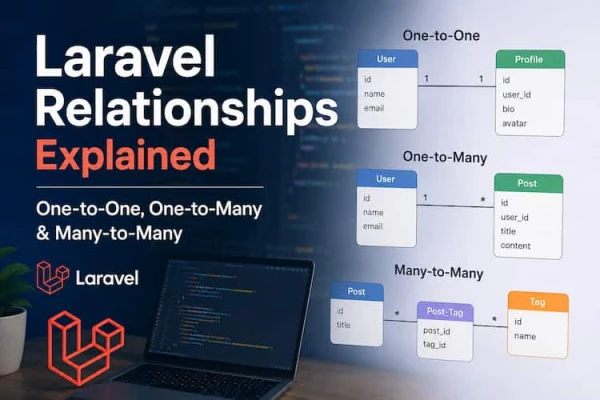
Models were another concept that became clearer through real projects. Initially, I saw a model as a PHP class connected to a database table. Eloquent gradually showed me that models can represent the relationships between the important pieces of information in an application. A user can have many posts, a post can have many comments, a profile can belong to a user, and a post can belong to multiple tags.
Once I understood those relationships, database design became much more meaningful. I was no longer thinking only about isolated tables; I was thinking about how the application's information was connected. This is an area I later explored in more detail in my article Laravel Relationships Explained: One-to-One, One-to-Many and Many-to-Many, where I focus specifically on how Laravel represents relationships between application data.
Views and Blade: Separating Presentation From Application Logic
Blade helped me understand another important principle: the user interface and application logic should not become one large mixture of code. The application can prepare the information a page needs, while the view focuses on presenting that information clearly to the user. This separation makes an application easier to understand because each part has a more specific responsibility.
I began to appreciate Blade more when my pages became dynamic. Displaying database records, showing validation errors, handling conditional content, and reusing layouts made it clear why a templating system matters. Blade was no longer simply a different way to write HTML. It was part of Laravel's approach to keeping presentation organized.
MVC: When the Pieces Became One System
I had heard the words Model, View, and Controller before Laravel truly made sense to me. I could even explain what the letters MVC represented. But memorizing the definition was different from understanding why the pattern exists. Building applications gave the pattern meaning.
Once I could follow a request into a route, understand the controller's responsibility, retrieve information through models, and present that information in a view, MVC became a mental map rather than an exam definition. That was one of the moments when Laravel stopped feeling like dozens of separate features and began to feel like one connected application framework.
My Biggest Laravel Learning Mistakes
Looking back, some of the experiences that taught me the most were mistakes. They slowed me down at the time, but they also exposed weaknesses in the way I was learning. Instead of seeing those mistakes as wasted time, I now see them as important parts of becoming more independent as a developer.
Skipping PHP Fundamentals
One of my earliest mistakes was trying to reach Laravel too quickly. Laravel makes PHP development more structured and productive, but it does not replace PHP. When I encountered classes, objects, methods, arrays, namespaces, inheritance, exceptions, and dependency injection without being completely comfortable with the underlying ideas, Laravel sometimes appeared more magical and complicated than it really was.
Going back to PHP fundamentals made a noticeable difference. Code that previously looked like “Laravel syntax” started to look like understandable PHP organized according to framework conventions. If I were starting again, I would still begin Laravel relatively early, but I would not ignore gaps in PHP knowledge. Whenever the framework exposed a concept I did not understand, I would return to the underlying PHP concept and strengthen it.
Copying Tutorials Without Understanding the Decisions
Tutorials were extremely useful when I was beginning, but they also created a trap. Following someone else building an application can create the feeling of progress because the project grows quickly. You create the same routes, controllers, models, and views, and everything works. The problem appears when you close the tutorial and attempt to create something slightly different.
I eventually learned that the most valuable part of a tutorial begins after the tutorial ends. Rebuilding a feature without looking at the instructions immediately reveals what I actually understood. Changing the requirements is even more useful. If a tutorial builds a simple blog, I can add categories, permissions, search, or another relationship. At that point I have to make decisions instead of copying them.
Not Reading Documentation Enough
In the beginning, Laravel documentation seemed more difficult than tutorials because it did not always tell a complete story around one beginner project. Tutorials felt easier because another person had already decided what information I needed. Over time, however, documentation became one of the most important tools in my learning process.
I stopped believing that a developer should memorize every method or framework feature. Knowing how to find accurate information is more useful. Documentation also helped me distinguish between Laravel's actual behavior and solutions copied from old forum posts that might apply to a different Laravel version.
Not Building Enough Projects
For a while, I spent too much time consuming programming content and not enough time building independently. Watching someone program can improve understanding, but it does not create the same problems that appear when you are responsible for the application yourself.
A real project forces decisions. I have to determine what data should exist, how tables relate, which routes are required, what users are allowed to do, how input should be validated, and how errors should be handled. Those decisions are where many Laravel concepts become real.
My first CRUD application was particularly important because CRUD connected many concepts that I had previously studied separately. Creating, reading, updating, and deleting records required routes, controllers, models, migrations, forms, validation, and Blade views to work together. I describe that stage more deeply in From Zero to My First CRUD in Laravel, because it was one of the experiences that moved me from following Laravel lessons to actually building with Laravel.
Overcomplicating Controllers
Another mistake was assuming that working code was automatically well-structured code. In small projects, I could place many responsibilities in one controller and experience no immediate problem. As the application grew, however, those controllers became increasingly difficult to understand.
This taught me to think about separation of concerns. A controller should not necessarily contain every detail of a business process simply because it can. Refactoring became less about making code look beautiful and more about reducing the cost and risk of future changes. This lesson eventually became important enough that I explored it separately in How to Refactor and Improve a Laravel Project Without Breaking Everything.
Building My First Real Laravel Applications
Building complete applications changed my relationship with Laravel more than any individual tutorial. Before I started building independently, routes, controllers, models, migrations, Blade, and validation were subjects I studied. Inside a project, they became tools I needed to solve actual problems.
A CRUD application is a good example. If users need to create records, I need a form and a route that accepts the request. The controller needs to process that request. The application needs to validate the submitted information before trusting it. A model needs to interact with the relevant database table, and a migration needs to define the table's structure. When users want to edit an existing record, I need to retrieve the correct data, display it in the form, validate the update, save the changes, and return an appropriate response.
Working through that process taught me something tutorials alone could not: application development is about connections. A route is useful because something needs to enter the application. A controller is useful because the request needs coordination. A model is useful because the application has data. Validation is useful because input cannot automatically be trusted. Blade is useful because the user needs to see and interact with the result.
This is why I would encourage someone learning Laravel to begin building small applications before feeling completely ready. The project does not have to be innovative. A task manager, simple blog, inventory application, booking prototype, or small administration dashboard can provide enough complexity to expose gaps in understanding. Those gaps are not failures. They show you what to learn next.
What I Wish I Knew Before Starting Laravel
One thing I wish I had understood earlier is that being confused at the beginning is normal when learning a framework with as many features as Laravel. I sometimes interpreted confusion as evidence that I was learning too slowly. In reality, I was trying to understand routing, databases, object-oriented programming, HTTP, validation, authentication, and framework conventions simultaneously.
I also wish I had understood how strongly fundamentals reinforce one another. Learning HTTP improves understanding of routes, requests, responses, middleware, sessions, and APIs. Learning relational database concepts improves migrations and Eloquent relationships. Improving object-oriented PHP makes controllers, services, models, and dependency injection less mysterious. Strengthening one foundation can therefore make several Laravel features easier at the same time.
Validation is a good example of how my understanding developed. At first, I thought validation mostly meant checking whether a field was empty or whether an email address had the right format. Later, I began to see validation as one of the boundaries protecting an application from invalid or unexpected data. That broader perspective is why I wrote Laravel Validation Explained: How Laravel Protects Your Application from Invalid Data, which explores the subject beyond simply memorizing validation rules.
Most importantly, I wish I had understood that I did not need to learn every Laravel feature before building useful applications. Framework knowledge grows naturally with projects. If a project does not need queues yet, I do not need to master queues before beginning. When a real requirement appears, the concept has context, and that often makes it easier to understand.
How Laravel Changed the Way I Think About Development
The most important result of learning Laravel was not simply becoming more comfortable with a PHP framework. Laravel changed the questions I ask when developing software. Earlier, the main question was often whether the feature worked. If clicking a button produced the expected result, I felt finished. As my experience grew, I began asking additional questions about where code belongs, whether responsibilities are separated, whether user input is properly validated, whether another developer could understand the implementation, and what would happen if the application became much larger.
That change also affected debugging. Instead of immediately searching for a solution and changing unrelated pieces of code, I try to identify where the expected application flow breaks. Did the browser send the request I expected? Did Laravel match the correct route? Did middleware affect the request? Did the controller execute? Did validation reject the input? Did the model retrieve the expected record? Did the database contain the expected data? Did the view receive the correct variable?
Thinking this way makes debugging less random. The error may still take time to solve, but I have a path to investigate. More importantly, every debugging session strengthens my understanding of how the application works.
What I Would Do Differently If I Started Again
If I had to learn Laravel again from zero, I would make the learning process much simpler. I would begin by making sure I understood the PHP fundamentals Laravel relies on, especially functions, arrays, object-oriented programming, classes, methods, namespaces, and exceptions. I would also learn the basics of HTTP requests and responses because so many Laravel concepts become clearer when the web itself makes sense.
After that, I would focus on Laravel's core application flow rather than trying to explore every feature. I would learn routes, controllers, Blade, models, and migrations, then immediately use them to build a small CRUD project. Once that application worked, I would introduce validation and relationships. Authentication, middleware, authorization, APIs, queues, events, caching, and more advanced architecture could come later when a project gave me a reason to use them.
I would also keep a record of the errors I encountered. A 404 route problem can teach routing. A 405 error can teach HTTP methods. A database error can reveal something about migrations, relationships, or SQL. A failed form can teach validation, CSRF protection, sessions, or request handling. Instead of treating bugs as interruptions to learning, I would treat debugging as part of the learning process itself.
Most importantly, I would spend less time worrying about how much Laravel I had memorized. Professional development does not require remembering every method available in the framework. It requires understanding the concepts well enough to recognize what is happening, knowing how to investigate a problem, and knowing where to find reliable information when necessary.
My Advice to New Laravel Developers
For someone currently learning Laravel, my main advice is not to try to understand the entire framework at once. Begin with the journey of one request and follow it carefully. Understand how the browser sends the request, how Laravel matches it to a route, what the controller does, when the model becomes involved, and how the final information reaches the view. Once that flow becomes familiar, many features that initially appear unrelated start fitting into the same mental picture.
Build something as soon as possible. It does not need to be a portfolio project or a complicated SaaS application. The purpose of the first projects is to create problems that require you to think. Add a feature without following a tutorial. Change something that already works. Break a route and understand why it fails. Modify a database relationship. Add validation to a form. Read the documentation when you become stuck and then return to the project.
That cycle of learning, building, breaking, investigating, fixing, and improving has been much more valuable to me than trying to memorize Laravel from beginning to end. The goal is not to become a developer who never encounters errors. That developer does not exist. The goal is to become a developer who can encounter an unfamiliar problem without immediately feeling lost.
Conclusion
My Laravel learning journey began with a lot of copying and uncertainty. Routes, controllers, models, migrations, Blade views, and other framework features initially looked like separate concepts that I had to remember. Building applications gradually showed me that they were different parts of the same system. Once I understood the path a request takes through an application, Laravel became much easier to reason about.
The mistakes I made were an important part of that process. Skipping some PHP fundamentals showed me why strong foundations matter. Depending too heavily on tutorials showed me the difference between following instructions and understanding a solution. Avoiding documentation taught me the importance of reliable technical references. Building too few projects showed me that programming cannot be learned passively. Writing controllers that handled too many responsibilities taught me why maintainability and structure matter as an application grows.
If I could reduce everything I learned to one idea, it would be this: learning Laravel is not about memorizing as much Laravel syntax as possible. It is about gradually building a mental model of how web applications work and then strengthening that model through real projects and real problems.
The moment Laravel truly became easier for me was not when I memorized another command or completed another tutorial. It was when I could look at an application, follow the request through its different layers, understand why those layers existed, identify where something had gone wrong, and decide how I wanted to improve it.
That is the kind of progress I now consider meaningful. Laravel stopped being something I was simply studying and became a tool I could use to think, build, debug, and improve applications with greater confidence.
































Discussion 0