
Laravel Method Not Allowed (405) Error — Causes, Fixes, and What It Really Means
Fix 1: Verify the Route Method
One of the most common reasons for a 405 error is using the wrong HTTP method.
For example, consider this route:
Route::post('/contact', [ContactController::class, 'store']);This route only accepts POST requests.
If you visit:
http://your-site.com/contactdirectly from the browser, Laravel sends a GET request automatically.
Result:
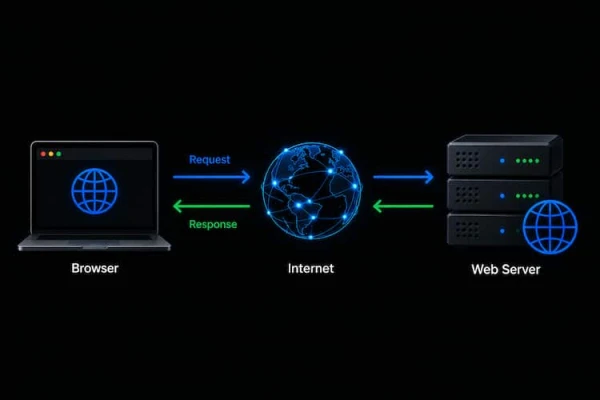
Laravel finds the route successfully, but because the route only accepts POST requests and the browser sends a GET request, the framework returns:
- 405 Method Not Allowed
Solution
Make sure the request method matches the route definition.
Fix 2: Check Your Form Method
A route may expect a POST request:
Route::post('/users', [UserController::class, 'store']);But the form is configured incorrectly:
Laravel receives a GET request while the route expects POST. Since the request method does not match the route definition, Laravel returns a 405 error.
Correct Version
Always verify that your form method matches the route method.
Fix 3: Missing @method('PUT') or @method('DELETE')
Many developers encounter 405 errors when updating or deleting records.
Suppose you have:
Route::put('/posts/{post}', [PostController::class, 'update']);The form looks like this:
Laravel receives POST while expecting PUT.
Since the HTTP method does not match the route definition, Laravel rejects the request and returns a 405 Method Not Allowed error.
Solution
Use method spoofing:
The same applies to DELETE routes.
Fix 4: Verify Routes Using route:list
Laravel provides an easy way to inspect routes:
php artisan route:listThis command shows:
- Available routes
- Allowed methods
- Controllers
- Middleware
For example:
POST users UserController@storeIf the route appears as POST only and you try to access it directly from the browser, Laravel automatically sends a GET request.
Because the route only allows POST requests, Laravel rejects the request and returns:
- 405 Method Not Allowed
If you're unsure which HTTP method Laravel expects, this should be your first debugging step.
Many developers immediately start changing routes or controllers, while a simple route:list command often reveals the problem within seconds.
Fix 5: Clear Route Cache
After modifying routes, Laravel may continue using older cached definitions.
Try:
php artisan route:clearAnd:
php artisan optimize:clearAfter clearing the cache, test the route again. Many developers spend hours debugging route definitions when the real problem is simply an outdated cached route.
This is especially important after deployment.
Many route-related problems are caused by cached routes rather than coding mistakes.
This issue often appears together with:
Laravel Works Locally but Not on Server
and
Laravel .env Not Working? Complete Fix Guide
Fix 6: Check API Request Methods
API integrations frequently trigger 405 errors.
For example:
The frontend sends a POST request:
fetch('/api/users', { method: 'POST' });However, Laravel only allows GET requests for this route:
Route::get('/api/users', [UserController::class, 'index']);Laravel expects a GET request, but receives POST instead.
Since the HTTP method does not match the route definition, Laravel returns:
- 405 Method Not Allowed
Laravel is behaving correctly because the route only supports GET requests.
Always verify that frontend requests and backend routes use the same HTTP method.
Fix 7: Verify Resource Controller Routes
Resource controllers are another common source of 405 Method Not Allowed errors.
Consider the following route:
Route::resource('posts', PostController::class);Laravel automatically generates multiple routes with different HTTP methods:
- GET /posts
POST /posts
GET /posts/{post}/edit
PUT /posts/{post}
PATCH /posts/{post}
DELETE /posts/{post}
Many developers assume all of these routes behave the same way.
However, each route expects a specific HTTP method.
For example, the update route expects:
- PUT /posts/{post}
But if the form sends:
Laravel receives a POST request instead of PUT.
Result:
405 Method Not Allowed
Solution
When updating records, use method spoofing:
You can also inspect all resource routes using:
php artisan route:listThis allows you to verify which HTTP method Laravel expects for each controller action.
Resource controllers save time, but they also make it easier to accidentally use the wrong request method and trigger a 405 error.
Laravel route:list Not Working? Fix Missing Routes Step by Step
How a Web Browser Works: From URL to Web Page









































Discussion 0