
Laravel Form Not Submitting — Why Nothing Happens When You Click Submit Laravel developer
You click the submit button, expecting something to happen, a redirect, a validation message, a response, anything that confirms your form is working, but nothing happens, no error, no feedback, no indication that the request was even sent, and in that moment the silence becomes more frustrating than any visible error, because at least errors give you direction, but this gives you nothing.
You check your code again, everything looks correct, the route is defined, the controller exists, the method is written properly, and yet the form behaves as if it is disconnected from your application entirely, leaving you wondering whether the problem is in your logic or somewhere deeper that you cannot immediately see.
This is one of the most confusing situations in Laravel development, not because it is complex, but because it hides itself behind the illusion that everything is fine.
Why Laravel Forms Sometimes Do Nothing When You Click Submit
When a Laravel form does not submit, the problem is rarely visible on the surface, because the issue is usually happening before your request even reaches the controller, which means Laravel is not the first place you should look, the real issue often exists in the layer between your form and your application.
This includes the browser, JavaScript, CSRF protection, routing, and sometimes even the server itself.
In many cases, what looks like a Laravel issue is actually connected to deeper problems such as Laravel Login Not Working? (Session, CSRF, Redirect Fix Guide)
because both depend on sessions and CSRF validation, and when those fail, the request is silently rejected.
The Hidden Role of CSRF in Laravel Forms
One of the most common reasons why a form does nothing when submitted is CSRF protection, because Laravel automatically protects your application from cross-site request forgery, and if your form does not include the CSRF token, Laravel will block the request completely.
What makes this confusing is that sometimes you do not see an obvious error, especially in production, where errors are hidden.
This is closely related to issues like Laravel Session Expired Error – Causes, Fix, and Prevention Guide
because CSRF tokens depend on sessions, and if the session is broken, your form will never submit properly.
JavaScript and Frontend Issues That Stop Form Submission
Sometimes the problem has nothing to do with Laravel itself, and this is exactly what makes it so confusing, because you naturally start debugging your controller, your routes, and your backend logic, while the real issue is happening silently in the browser before the request is even sent, which means Laravel never receives anything to process.
JavaScript can completely block form submission without showing any clear error, especially when working with event listeners, AJAX logic, or frontend frameworks, where a simple mistake can interrupt the entire request flow without leaving obvious traces.
A single event.preventDefault() placed inside a submit handler can stop the form entirely, and if there is no logging or error handling, it creates the illusion that the form is broken, when in reality it is being intentionally stopped by your own frontend logic.
Even more subtle issues can appear when JavaScript files fail to load, because if your scripts are missing or broken, critical functionality such as validation, form handling, or event binding may never execute, which leads to a completely unresponsive form.
This often happens in production environments where asset compilation or deployment is not handled correctly, leading to problems similar to
Vite manifest not found in Laravel (beginner-friendly explanation and fix)
where the application fails to load the JavaScript it depends on, and as a result, the form appears dead without any clear reason.
Routing Problems That Make Forms Look Broken
Another common reason why nothing happens when you submit a form is that the request is never reaching the correct route, which creates a situation where everything looks correct in your code, but Laravel does not know how to handle the request once it is sent.
This can happen when the form action is incorrect, when the HTTP method does not match the route definition, or when the route itself is not properly registered or cached incorrectly.
In these situations, the browser may send the request, but Laravel responds in a way that is not visible to you, especially if error messages are hidden in production, making it seem as if nothing happened at all. This type of issue is closely related to problems like laravel route not working 404 error complete fix guide
where routes exist in your code but are not recognized by the application due to caching, server configuration, or incorrect definitions.
Server and Environment Issues That Affect Form Submission
Sometimes the problem goes even deeper, beyond JavaScript and routing, into the environment itself, because Laravel forms rely heavily on sessions, cookies, and request handling, and if any of these components fail, your form may stop working without showing any clear error.
For example, if sessions are not properly configured, Laravel may reject the request silently, especially in cases involving CSRF protection, where the request is blocked before reaching your controller.
This becomes more common after deployment, when differences between your local environment and your production server introduce unexpected behavior, such as missing session drivers, incorrect domain configuration, or cookie issues.
These types of problems are often seen in situations similar to Laravel 500 Server Error — Why It Happens After Deploy or During Development where the system fails internally without providing clear feedback to the user.
How to Fix Laravel Form Not Submitting Step by Step
Fixing this issue requires a structured approach that follows the path of the request from the browser to the server, instead of guessing randomly.
Start by opening your browser developer tools and checking whether the request is actually being sent when you click submit, because if no request appears in the network tab, the problem is likely in your frontend.
Then verify that your form includes @csrf, because missing CSRF tokens will cause Laravel to reject the request silently in many cases.
Check your route definition and ensure that it matches both the URL and the HTTP method used in your form.
Review your JavaScript carefully and look for anything that might prevent submission, including event listeners or validation scripts.
Clear Laravel cache using php artisan optimize:clear to ensure that outdated configurations are not affecting your application.
Verify your session configuration, especially if the issue only appears after deployment.
Finally, test your application in the production environment to confirm whether the issue is environment-specific.
Understanding the Full Request Flow in Laravel
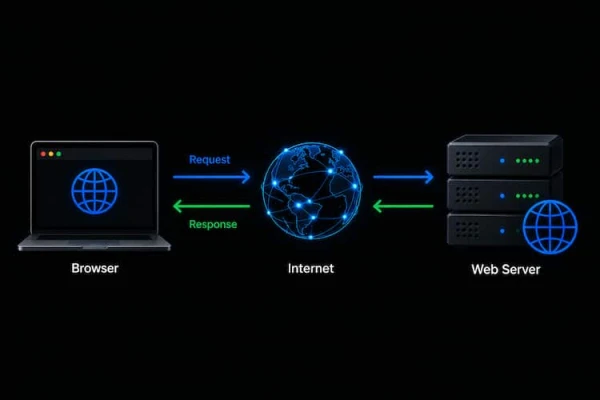
To fully understand why your form is not submitting, you need to see the process as a complete flow rather than isolated parts, because the request does not go directly from the button to the controller, it passes through multiple layers that must all work correctly.
The journey starts in the browser, where JavaScript may modify or block the request, then moves through the HTTP layer, passes Laravel middleware including CSRF validation, reaches the routing system, and finally arrives at the controller.
If any step in this chain fails, the entire process stops, and depending on where it fails, you may or may not see an error.
Understanding this flow is what transforms debugging from guessing into a clear and logical process.
Conclusion: When Nothing Happens, Look Beyond Laravel
When a Laravel form appears to do nothing, it's rarely because the framework has stopped working. In most cases, something is preventing the request from reaching your application, whether it's a JavaScript error, an incorrect route, missing CSRF protection, validation failure, or a server configuration issue. The key to solving these problems is changing the way you think about them. Instead of assuming Laravel is broken, start asking where the request is being interrupted. That simple shift in perspective often leads you to the real cause much faster.
Once the request successfully reaches your controller, Laravel Eloquent takes over to interact with your database, making it easy to create, update, and retrieve data. If you'd like to learn more about how Eloquent works behind the scenes, be sure to read our guide on What Is Laravel Eloquent? Understanding Models and Laravel's ORM.
Finally, remember that forms are only one part of Laravel's request lifecycle. Before a request reaches your routes, middleware, or controllers, Laravel first prepares the entire application by registering its core services. Our Understanding Laravel Service Providers: A Beginner Friendly Guide explains how this startup process works and why it's essential to understanding Laravel's architecture. If your form displays validation messages instead of submitting successfully, you may also find our Laravel Form Errors — Complete Fix Guide helpful for troubleshooting common validation issues.






































Discussion 0