
From Zero to My First CRUD in Laravel: How I Built My First Real Web Application
Starting with Laravel was one of the most intimidating experiences of my web development journey. I didn’t begin with confidence, clarity, or a roadmap. I began with curiosity, confusion, and a strong desire to understand how real web applications are built.
When I first opened the official Laravel documentation, everything felt overwhelming—routes, controllers, migrations, models, views, and concepts I had never used before. At that moment, Laravel did not feel beginner-friendly at all. It felt powerful, layered, and complex. That exact feeling is something I described in detail earlier in Starting With Laravel Can Feel Overwhelming, where the weight of the framework is felt before any clarity appears.
Through patience, persistence, and hands-on practice, I eventually moved from zero understanding to building my first complete CRUD application—but that shift took time.
This article is my personal Laravel beginner journey, written for anyone following a Laravel beginner guide and wondering if they will ever truly “get it.”
Understanding Laravel and Why It Felt Overwhelming at First
When I first encountered Laravel, my main goal was simple: understand how it actually works. I had heard many developers describe Laravel as an elegant and beginner-friendly PHP framework, but my initial experience felt very different.
Opening the documentation for the first time introduced me to many unfamiliar ideas all at once. Laravel is built around structure, and that structure is its strength—but for beginners, it can feel like a wall instead of a guide.
I was suddenly introduced to:
MVC architecture
Routing
Migrations
Controllers
Service containers
Eloquent ORM
…before I had even written meaningful code.
Nothing clicked immediately, and that frustration made me question whether I was ready for Laravel at all. That self-doubt later became a major theme in Learning Laravel Without a CS Degree: How I Built Confidence, Skills, and Real Projects From Zero, where I reflected on learning without a traditional background.
What I later realized is that confusion at the beginning is normal. Laravel is learned by using it, not memorizing it. Once I accepted that understanding would come gradually, the pressure I put on myself began to fade.
Learning MVC Through Practice, Not Memorization
MVC (Model–View–Controller) was one of the first concepts that genuinely scared me. I read explanations, watched videos, and memorized definitions—but none of it felt real.
That changed only when I started building real features.
In practice, MVC became clear:
Models represent data and database logic
Controllers handle application logic and user requests
Views display data to the user
Seeing data move from a route to a controller, then into a model, and finally appear inside a Blade view was the turning point. MVC stopped being abstract theory and became a practical workflow.
This realization connects directly to the lessons I later shared in What I Wish I Knew About Laravel Before I Started, where I explain how understanding structure earlier could have saved me months of confusion.
MVC wasn’t limiting me.
It was organizing my thinking.
Setting Up the Development Environment Correctly
Before writing any real Laravel code, I learned a hard lesson: environment setup matters more than you think. Many early struggles weren’t caused by bad logic, but by misconfigured tools.
I spent time installing and understanding:
PHP
Composer
A local server environment like XAMPP or Laravel Sail
Once everything worked correctly, my learning experience changed completely. Errors became meaningful instead of random, commands behaved as expected, and my confidence increased because the foundation was solid.
This stage laid the groundwork for what later became a major breakthrough in Laravel Was Hard Until I Understood This – How I Learned Laravel Step by Step, when I finally understood how all the pieces connect.
Exploring Laravel’s Core Features One by One
Laravel offers many features out of the box. Trying to learn everything at once is one of the fastest ways to burn out.
I learned to slow down and focus on the essentials first:
Routing
Blade templating
Migrations
Eloquent ORM
By focusing on these core features, Laravel became manageable instead of overwhelming. Progress became visible, and motivation returned step by step.
Routing: Understanding How Requests Enter Laravel
Routing was my first real breakthrough. Before understanding routes, Laravel felt mysterious. I didn’t know where requests came from or how pages were connected.
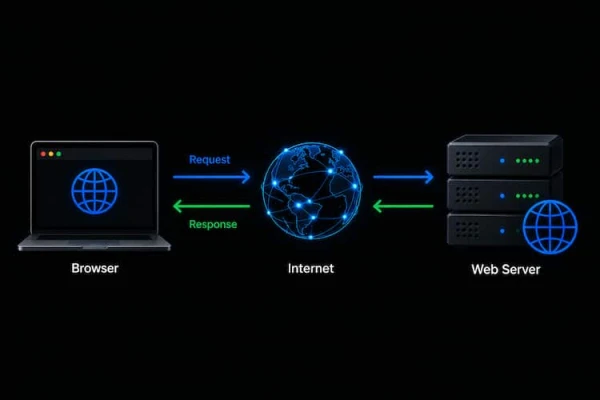
Once I realized that every request in Laravel starts with a route, everything changed. Routes define how URLs map to logic and act as the true entry point of the application.
This realization later became central to Laravel Was Hard Until I Understood This – How I Learned Laravel Step by Step, where understanding flow replaced fear with confidence.
Laravel stopped feeling magical and started feeling logical.
Blade Templating: Seeing Backend Logic Come Alive
Blade was the feature that made me feel productive for the first time. Backend development felt invisible until I saw Blade in action.
Using Blade, I learned how to:
Loop through data
Use conditional statements
Reuse layouts and components
Seeing dynamic data rendered correctly gave me motivation and confidence. Laravel stopped feeling theoretical and started feeling real and practical.
Migrations and Eloquent: Understanding Data Management
Databases used to intimidate me. Writing raw SQL inside PHP felt messy and fragile. Laravel migrations completely changed that relationship.
Migrations taught me that database structure can be controlled through code.
Eloquent ORM made database interactions expressive, readable, and safe.
Once I understood migrations and Eloquent, I felt confident that my application could grow without breaking.
Building My First CRUD Project: Where Everything Connected
After learning the basics, I applied them by building a CRUD application. I chose a small blog project because it naturally includes all CRUD operations:
Create posts
Read posts
Update posts
Delete posts
This project forced me to connect everything I had learned—routes, controllers, models, views, validation, and database logic.
That moment—when everything finally connected—was the same turning point I later described in My First Laravel Project: How One Simple App Changed Everything.
Errors, Growth, and Emotional Progress
Implementing CRUD logic was not smooth. I made many mistakes—misnamed routes, missing variables, broken forms, and validation errors. At first, every error felt personal.
Over time, that relationship changed.
Laravel’s error messages taught me how to debug calmly and logically. Errors became feedback instead of judgment. Many of these lessons were later documented honestly in My Biggest Laravel Learning Mistakes.
Learning Laravel isn’t only technical—it’s emotional.
Final Thoughts: From Zero to Your First CRUD Is Possible
Building my first CRUD project taught me lessons I still use today:
Start small and build gradually
Read documentation patiently
Practice consistently
Debug calmly
Trust the process
CRUD projects are not small—they are foundational. They teach you how Laravel applications actually work.
If you are starting today, do not rush advanced features. Begin with CRUD. Build something simple. Break it. Fix it. Learn from it.
That long-term transformation—from confusion to confidence—is something I ultimately tied together in My Journey With Laravel: How This Framework Transformed the Way I Learn, Think, and Build.
Laravel will reward your effort.If you are starting today, do not rush advanced features. Begin with CRUD. Build something simple. Break it. Fix it. Learn from it. Laravel will reward your effort.
Explore My Laravel Journey
This website is a personal space where I share my real experience learning Laravel—from confusion and doubt to clarity and confidence. Each article represents a chapter of my story, and together they show how I grew from a beginner to someone who builds real Laravel applications.
Click any title below to dive deeper into each part of my journey:
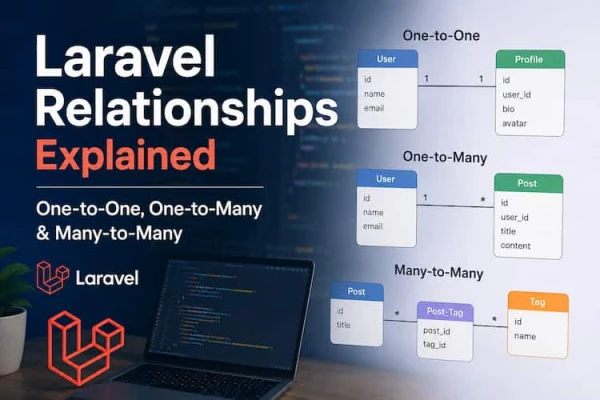
Laravel Relationships Explained: One-to-One, One-to-Many & Many-to-Many
Why I Chose Laravel: The Framework That Changed How I Learn and Build
Discover why Laravel became the turning point in my development journey. This article explains how I found structure, direction, and a framework that made learning feel intentional instead of chaotic.






























Discussion 0