
Learning Laravel Without a CS Degree: How I Built Confidence, Skills, and Real Projects From Zero
Starting a development journey without a computer science degree can feel intimidating. When I began learning Laravel, I didn’t start with confidence, clarity, or a sense of belonging. I started with doubt, hesitation, and the quiet fear that maybe I had arrived too late to the world of web development.
I didn’t fully understand algorithms, data structures, or advanced programming concepts. I constantly questioned what separated a “real developer” from someone who was simply following tutorials. What I did have, however, was curiosity and a strong desire to build something real—applications that worked, solved problems, and proved to myself that I was capable.
Laravel didn’t ask about my academic background. It didn’t care what I studied or where I came from. It responded only to effort, consistency, and patience. This article tells my honest Laravel beginner journey—starting from zero, choosing to learn Laravel step by step, and growing through confusion, mistakes, and persistence.
Starting From Zero, Not From Confidence: Facing Laravel Without a Technical Background
I did not begin learning Laravel with confidence. I began with questions and uncertainty. Opening my code editor often came with a silent fear that I wasn’t qualified to be there.
Without a formal background in computer science, I felt like an outsider. Many developers online seemed fluent in concepts I barely understood. Tutorials made progress look fast and effortless, while I struggled to grasp the basics. This gap between perception and reality created a constant sense of being behind.
What kept me going was not confidence—it was intention. I wanted to build real applications, not just watch others do it. That intention became stronger than my doubts.
That early pressure and overwhelm was similar to what I wrote about in Starting With Laravel Can Feel Overwhelming—the stage where the framework feels heavy before it becomes clear.
Feeling Behind Before Even Writing Code: The Mental Barrier of Comparison
Before writing my first Laravel route, I already felt behind. Every time I opened the editor, comparison crept in. Computer science graduates appeared to understand concepts intuitively. Discussions about architecture and design patterns felt distant and unreachable.
Even the official Laravel documentation initially felt overwhelming. Terms like middleware, service containers, and facades seemed heavy when I didn’t yet understand their purpose. At that stage, learning the Laravel framework felt more stressful than exciting.
What I didn’t realize then was that comparison was slowing me down more than lack of knowledge. Laravel eventually taught me to focus inward—to measure progress against my past self, not others.
At that stage, the challenge was not only technical. Understanding Laravel documentation, error messages, and community discussions required strong English skills. As a non-native speaker, learning Laravel also meant learning English at the same time — a parallel journey that deeply shaped how I learned and understood the framework.
This experience later became a full reflection in How I Learned English as a Programmer While Learning Laravel, where I explain how language stopped being a barrier and became part of my growth as a developer.
The Invisible Weight of “No Degree”: Redefining What Makes a Real Developer
Not having a computer science degree created an invisible pressure. Every bug felt personal. Every error felt like confirmation that I didn’t belong.
Over time, Laravel helped me unlearn a damaging belief: that formal education defines capability. The framework didn’t require perfection or prior mastery. It required consistency. That realization changed everything.
I learned that understanding grows through usage, not credentials. Once I accepted that mistakes were part of the process, learning became lighter and more sustainable.
That lesson connects with reflections I later shared in What I Wish I Knew About Laravel Before I Started—because mindset is often the missing piece.
Learning MVC by Using It, Not Memorizing It
MVC meant absolutely nothing to me when I first encountered it. I read definitions, watched diagrams, and tried to memorize explanations, but none of it truly clicked. The words felt theoretical and disconnected from real development. I understood the idea of MVC, but not its purpose.
Everything changed when I stopped trying to memorize MVC and started using it in real features. As I built simple functionality, the separation of responsibilities became clear through experience. Models naturally became the place for data and database logic. Controllers acted as the bridge between requests and responses. Views focused entirely on displaying results.
Seeing data move through these layers transformed my understanding of how applications are built. MVC stopped being an abstract concept and became a practical workflow. Laravel made architecture approachable, allowing me to experience structure instead of forcing me to understand it upfront.
This “click moment” is close to what I described in Laravel Was Hard Until I Understood This – How I Learned Laravel Step by Step—when I finally understood that Laravel is about flow, not memorization.
Learning Through Confusion, Not Clarity: Accepting the Process
Laravel did not feel simple in the beginning. It felt layered, opinionated, and sometimes overwhelming. At first, I assumed that confusion meant I was doing something wrong.
Over time, I realized the opposite was true. Confusion was a sign that I was learning something meaningful. Laravel is designed for scalability, and scalability requires structure. Once I accepted confusion as part of the learning process, pressure disappeared.
I stopped chasing instant clarity and allowed myself to sit with uncertainty. Slowly, repetition connected concepts, patterns emerged naturally, and understanding followed without force. Confidence grew not because things became easier, but because I became more patient with the process.
Routing Was My First Real Breakthrough
Routing confused me deeply at the beginning. I didn’t understand why routes existed separately from controllers or why requests didn’t go directly to logic. It felt like unnecessary complexity.
Then one simple realization changed everything: every request starts with a route.
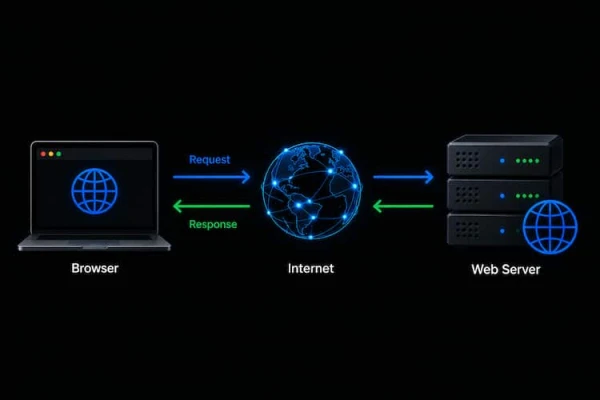
Routes are the true entry point of a Laravel application. They define how requests enter the system and where they are directed. Once I understood this flow, Laravel stopped feeling unpredictable. The framework became logical, intentional, and structured.
Routing was the moment Laravel truly clicked for me. From that point forward, I could mentally trace how an application worked from request to response.
Blade Templates Gave Me Control and Immediate Feedback
Blade was the first Laravel feature that made me feel genuinely productive. For the first time, I could immediately see the results of my backend work in the browser.
Blade allowed me to loop through data, apply conditions, and reuse layouts cleanly. Instead of mixing logic and presentation carelessly, Blade provided a clear and readable way to render dynamic content.
That immediate visual feedback boosted motivation. It connected backend logic with user-facing results, making the learning process rewarding and tangible instead of abstract.
Seeing Dynamic Data for the First Time Changed Everything
The first time I saw database data rendered inside a Blade view, something shifted internally. Laravel stopped being theory and became real.
That moment proved that I wasn’t just following instructions—I was building something functional. Seeing my own data displayed dynamically removed a major layer of doubt and replaced it with belief.
Dynamic data turned learning into creation. It marked the moment I started seeing myself not just as a learner, but as someone capable of building real applications.
CRUD Projects Were the Turning Point in My Laravel Beginner Journey
Tutorials gave me familiarity, but CRUD projects gave me understanding. Building full CRUD functionality forced me to connect every part of Laravel together.
Routes, controllers, models, views, validation, and database interactions all had to work as one system. CRUD projects revealed how real Laravel applications are structured and maintained.
This was the turning point where fragmented knowledge became a complete picture. CRUD wasn’t just practice—it was integration, and integration is where true learning happens.
That exact “integration moment” is what I documented in From Zero to My First CRUD in Laravel: How I Built My First Real Web Application—because CRUD is where Laravel becomes real for Laravel for beginners.
Validation Taught Me to Think Like a Professional Developer
Validation changed how I approached development entirely. Instead of trusting user input, Laravel taught me to defend my application.
Validation introduced responsibility into my workflow. I began thinking about security, data integrity, and user experience. Code stopped being about “making it work” and started being about making it reliable and safe.
This shift made me feel professional for the first time—not because of complexity, but because of awareness.
Errors Became Learning Tools Instead of Proof of Failure
At first, errors felt discouraging. A single exception could destroy my motivation. Laravel changed that by providing clear, descriptive error messages.
Once I learned to read errors calmly, debugging became a learning process instead of an emotional reaction. Errors were no longer personal failures—they were instructions pointing me toward improvement.
Many of these lessons later turned into a full article: My Biggest Laravel Learning Mistakes.
Understanding Project Structure Brought Peace and Confidence
Laravel’s folder structure felt overwhelming at the beginning. Over time, it became one of the framework’s greatest strengths.
Each folder has a clear responsibility. Each file exists for a reason. Understanding this structure reduced anxiety and increased confidence. Projects stopped feeling chaotic and started feeling predictable and manageable.
Structure brought peace—and peace allowed focus.
I Didn’t Need a Degree, I Needed Consistency
What I lacked in formal education, I replaced with consistency. Laravel rewarded daily effort far more than background or credentials.
Showing up every day—even for small progress—created momentum. That realization removed one of my biggest mental barriers and replaced doubt with discipline.
From Learner to Builder: The Identity Shift That Changed Everything
At some point, I stopped saying, “I’m learning Laravel,” and started saying, “I build with Laravel.”
That identity shift mattered more than any technical milestone. It marked the moment I trusted myself. Confidence didn’t come from mastery—it came from repetition and experience.
This shift is also part of the bigger story I tied together in My Journey With Laravel: How This Framework Transformed the Way I Learn, Think, and Build.
Final Thoughts: Starting From Zero Is Enough
Learning Laravel without a computer science degree was never about proving intelligence. It was about commitment, patience, and persistence.
Every CRUD project, every error, and every confusing moment shaped the developer I am becoming.
If you are starting from zero, remember this:
Laravel does not ask where you come from.
It does not ask for confidence.
It only asks that you keep going.
Explore My Laravel Journey
This website is a personal space where I share my real experience learning Laravel—from confusion and doubt to clarity and confidence. Each article represents a chapter of my story, and together they show how I grew from a beginner to someone who builds real Laravel applications.
Click any title below to dive deeper into each part of my journey:
Why I Chose Laravel: The Framework That Changed How I Learn and Build
Discover why Laravel became the turning point in my development journey. This article explains how I found structure, direction, and a framework that made learning feel intentional instead of chaotic.
My First Laravel Project: How One Simple App Changed Everything
Read about the moment learning turned into building. My first Laravel project was small, but it completely changed how I saw myself as a developer.




























Discussion 0