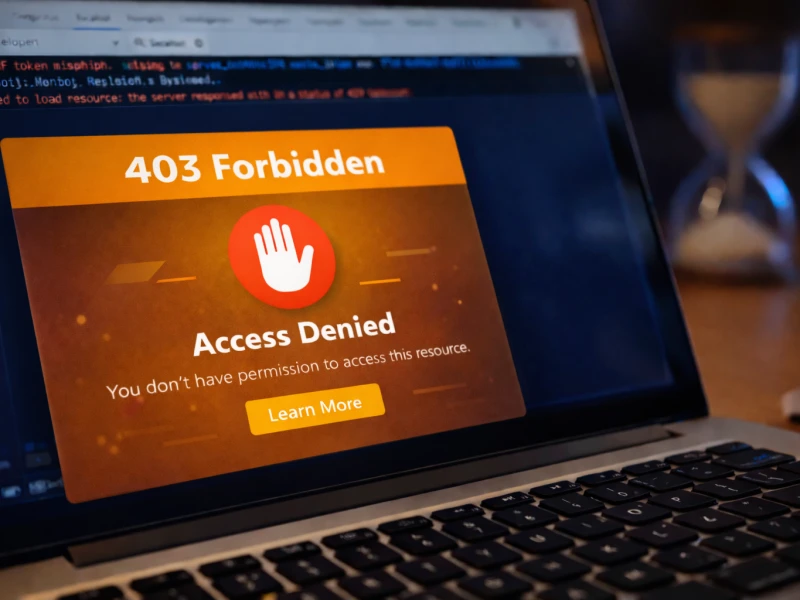
Laravel 403 Forbidden Error – Causes, Fixes, and What It Really Means
Few things feel more confusing than opening your Laravel application and suddenly seeing a message that simply says “403 Forbidden.” The error appears without much explanation. The route exists, the controller seems correct, and the page might have worked perfectly just moments before. Yet now the server refuses the request entirely, leaving developers wondering what exactly went wrong.
For developers who are still learning Laravel, this moment can feel frustrating. The application appears to be functioning normally, but access to a specific page or action is suddenly blocked. Because the message itself is short and vague, many developers struggle to determine whether the problem originates from Laravel, from the web server, or from the hosting environment.
⚡ Quick Fix (Try This First)
Before deep-diving into configuration files, run these commands in your terminal to ensure Laravel isn't serving a cached version of your routes or configuration:
php artisan route:clearphp artisan cache:clearphp artisan config:clearIf you are using Form Requests (validation classes), make sure the authorize() method is explicitly set to true:
public function authorize(): bool
{
   return true; // If this returns false, it throws a 403 error automatically!
}
In reality, the Laravel 403 Forbidden error rarely has a single cause. Instead, it usually appears when multiple layers of the application interact in unexpected ways. Modern Laravel applications operate across several systems at once: the Laravel framework itself, the web server configuration, authentication systems, and hosting-level security rules. When one of these layers decides that a request should not be allowed, the server responds with a forbidden status.
Developers often encounter this issue after modifying routes, adding authentication middleware, or deploying a project to a live server. For example, deployment-related changes can sometimes trigger other unexpected problems as well. If your project recently moved from a local environment to production, you might also encounter issues such as “Laravel Storage:link Not Working on cPanel,” which can prevent images and uploaded files from appearing correctly after deployment.
Understanding why a 403 error appears in Laravel requires looking at the system as a whole rather than focusing on a single file or function. Once developers understand how Laravel manages authorization, middleware, and server interactions, diagnosing the problem becomes far easier.
What the Laravel 403 Forbidden Error Actually Means
The 403 Forbidden error indicates that the server understands the request but refuses to allow access to the requested resource. In other words, the request itself is technically valid, but the system considers the action unauthorized.
This behavior is very different from other common web errors. For example, a 404 error means that the requested page does not exist, while a 500 server error indicates that the application failed internally while trying to process the request. If you have encountered that type of problem before, you may want to read “Laravel 500 Server Error — Why It Happens and What to Do,” which explains why internal server failures sometimes appear after deployment or configuration changes.
The 403 error sits between these scenarios. The requested resource exists, the server is functioning, but access is intentionally blocked for security reasons.
In Laravel applications, this restriction can originate from several different places. The framework itself may enforce access rules through middleware and authorization systems. The web server may apply restrictions through configuration rules. Hosting providers may also impose security policies that influence how requests are processed.
Because of this layered architecture, the same error message can come from completely different sources. Recognizing this distinction is important because it prevents developers from debugging the wrong part of the system.
Common Causes of the Laravel 403 Forbidden Error
There are several situations that can lead to a 403 error in a Laravel application. Understanding these causes allows developers to approach the problem logically rather than guessing possible solutions.
One of the most common causes is authorization restrictions within the application itself. Laravel provides powerful tools for protecting routes, controllers, and actions. Through policies, gates, and middleware, developers can define exactly which users are allowed to access specific resources. When a request fails these checks, Laravel may intentionally return a forbidden response.
Another frequent cause involves server-level security restrictions. Web servers often include protective rules that prevent access to sensitive files or directories. These rules are designed to protect configuration files, environment variables, and system directories from being accessed through the browser. If a request accidentally triggers one of these restrictions, the server may block it immediately.
Fixing the Web Server Configuration
If the 403 error is coming directly from the server (like Apache or Nginx) before it even boots up your Laravel application, the issue lies within your directory configuration.
For Apache (Shared Hosting / cPanel), verify that your .htaccess file inside the public/ directory contains the correct redirection rules:
# Apache Server Configuration


       Options -MultiViews -Indexes
      RewriteEngine On   # Handle Authorization Header
   RewriteCond %{HTTP:Authorization} .
   RewriteRule .* - [E=HTTP_AUTHORIZATION:%{HTTP:Authorization}]   # Redirect Trailing Slashes...
   RewriteCond %{REQUEST_FILENAME} !-d
   RewriteRule ^(.*)/$ /$1 [L,R=301]   # Send Requests To Front Controller...
   RewriteCond %{REQUEST_FILENAME} !-d
   RewriteCond %{REQUEST_FILENAME} !-f
   RewriteRule ^ index.php [L]
For Nginx servers, ensure your site configuration profile points accurately to the /public directory as the root, and handles URL processing through index.php:
# Nginx Server Configuration
server {
   listen 80;
   server_name yourdomain.com;
   root /home/user/your-project/public; # Must end in /public

   index index.php;

   location / {
       try_files $uri $uri/ /index.php?$query_string;
   }
}
Deployment environments can also introduce complications. When a Laravel application is moved from a local machine to a production server, the hosting environment may behave differently. File permissions, directory structures, and security policies may all influence how requests are processed.
For example, developers often encounter multiple deployment-related errors at the same time. Alongside access restrictions, they might also experience problems like “Vite Manifest Not Found in Laravel,” which occurs when the application cannot locate compiled assets after deployment. These issues may appear unrelated, but they are often connected to differences between development and production environments.
Middleware and Authorization Restrictions in Laravel
Laravel’s middleware system plays a crucial role in controlling access to application routes. Middleware acts as a filtering layer that processes requests before they reach the core application logic.
For example, authentication middleware ensures that only logged-in users can access protected routes. Authorization middleware checks whether a user has permission to perform a specific action. These systems allow developers to build secure applications where sensitive features are accessible only to authorized users.
When a request fails these checks, Laravel may respond with a 403 Forbidden status. From the framework’s perspective, this behavior is correct and intentional. The application is protecting itself from unauthorized access.
Checking Your Route Middleware
Open your routes/web.php or routes/api.php file and look closely at the middleware attached to the breaking route. If a guest tries to access a route protected by the auth middleware, or a user lacks the specific role defined in your Gates, Laravel will block the request:
Route::middleware(['auth', 'can:access-admin'])->group(function () {Route::get('/admin/settings', [AdminController::class, 'index']);});To fix this, ensure your authentication state matches the route requirements, or use a custom handler to customize the fallback redirect instead of a hard 403 page.
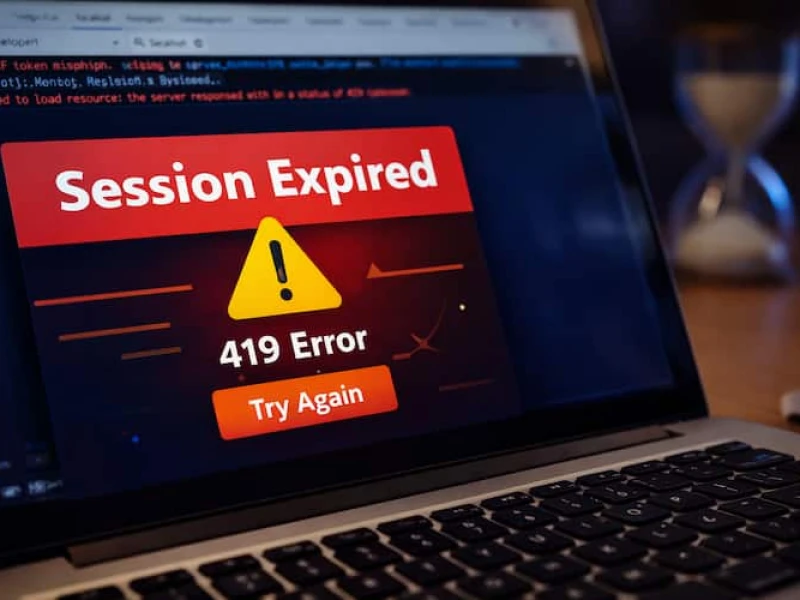
Sometimes developers mistake authorization issues for session problems. If authentication suddenly stops working, the error may appear similar to the “419 Page Expired Error in Laravel,” which typically occurs when CSRF tokens or session data become invalid. Although the symptoms may appear similar, the underlying causes are different.
Reviewing middleware definitions, authentication rules, and authorization policies is therefore an essential step when diagnosing a 403 error.
Server Configuration and Security Rules
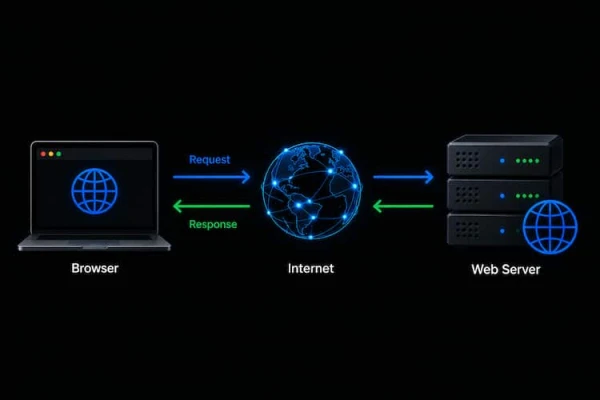
While Laravel controls application behavior, the web server itself controls how incoming requests are processed. Server configuration can therefore play a major role in determining whether a request reaches the application at all.
Many servers apply strict security policies designed to protect system files and directories. For example, some servers block direct access to certain directories, restrict execution of specific file types, or enforce rules about how URLs are routed through the application.
If a request violates one of these rules, the server may immediately return a 403 Forbidden response before Laravel even has a chance to process the request.
This situation can be particularly confusing because developers may assume that the framework itself is responsible for the error. In reality, the request never reaches the Laravel application layer at all.
Understanding the relationship between Laravel and the web server is therefore essential when troubleshooting access problems.
Deployment Environments and Hosting Differences
Many developers encounter the Laravel 403 error for the first time shortly after deploying their application to a live server. During development, the project may function perfectly on localhost. Routes work correctly, authentication behaves as expected, and pages load without issues.
However, once the application is deployed, the hosting environment may introduce new variables that affect how requests are handled.
Shared hosting platforms often implement additional security restrictions. File permissions, request filtering mechanisms, and directory access policies may all behave differently than they do on a local development machine.
These differences can sometimes produce a cascade of errors during deployment. For example, developers may suddenly encounter unexpected authentication or session issues after moving a Laravel project to a production server. In some situations, Laravel may start rejecting requests because session data or security tokens are no longer valid. If you have experienced something similar, you may want to read Laravel Session Expired Error – Causes, Fix, and Prevention Guide, which explains why session-related problems appear and how to resolve them.
Although these errors may appear unrelated, they often share a common cause: the differences between development environments and production infrastructure.
Understanding these differences is a crucial step toward building stable and reliable Laravel applications.
Preventing Laravel 403 Access Errors
While debugging errors is an inevitable part of development, preventing them is always preferable. Developers can significantly reduce the likelihood of encountering 403 errors by following several best practices.
First, authorization rules should be clearly defined within the application. When routes require specific permissions, those requirements should be documented and easy to understand. This prevents confusion when debugging access issues later.
Second, server configuration should be reviewed carefully before deployment. Ensuring that security policies do not conflict with Laravel’s routing system can prevent unexpected restrictions from appearing in production.
Finally, thorough testing after deployment is essential. Developers should verify authentication flows, confirm that protected routes behave correctly, and ensure that the application responds as expected across different browsers and devices.
By following these practices, developers can identify potential access issues early and avoid many common deployment problems.
Laravel 403 Troubleshooting Checklist
Before continuing with advanced debugging, verify the following:
- Is the user authenticated?
- Does the user have the required permission or role?
- Is the route protected by middleware?
- Does the Form Request authorize() method return true?
- Are the file and folder permissions correct?
- Is the web server pointing to the public directory?
- Have you cleared the Laravel caches?
- Is the .env file configured correctly?
Frequently Asked Questions (FAQ)
What causes a 403 Forbidden error in Laravel?
A 403 Forbidden error usually occurs because Laravel or the web server intentionally blocks access to a resource due to authorization, middleware, permissions, or server configuration.
What is the difference between a 403 and a 404 error?
A 403 error means the resource exists but access is denied. A 404 error means the requested resource cannot be found.
Can file permissions cause a Laravel 403 error?
Yes. Incorrect file or directory permissions can prevent the web server from accessing Laravel files.
Can middleware return a 403 response?
Yes. Middleware such as auth, can, or custom authorization middleware can deny access and return a 403 Forbidden response.
Does clearing Laravel cache fix 403 errors?
Sometimes. Clearing route, configuration, and application caches can resolve issues caused by outdated cached data.
Conclusion
The Laravel 403 Forbidden error may initially appear intimidating, but in most situations it represents a deliberate access restriction rather than a critical application failure.
By understanding how Laravel handles authorization, how web servers enforce security policies, and how deployment environments influence application behavior, developers can quickly determine the true cause of the error.
Instead of viewing the 403 error as a mysterious obstacle, it can be seen as a reminder of the security systems working behind the scenes. Every time the framework blocks an unauthorized request, it reinforces the protections that keep Laravel applications safe and reliable.
With experience, developers begin to recognize that errors like 403 Forbidden are not signs that something is broken. Rather, they are signals that the system is doing exactly what it was designed to do: protecting the application and the users who rely on it.Laravel Form Errors — Complete Fix Guide
👉 Want to understand how Laravel validates incoming data? Read: Laravel Validation Explained: How Laravel Protects Your Application from Invalid Data































Discussion 0