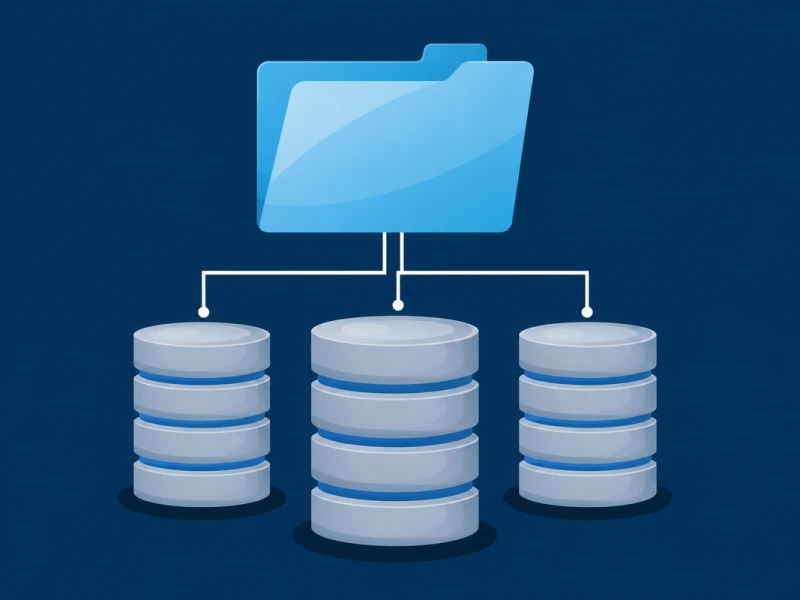
Forest vs Tree vs Domain vs OU: Understanding Active Directory Structure
After learning the basics of Active Directory, one of the most confusing topics for beginners is understanding how the directory is organized internally.
Terms such as Forest, Tree, Domain, and Organizational Unit (OU) often appear together in Microsoft documentation, certification courses, and Windows Server environments. While these concepts may seem complicated at first, they become much easier to understand when viewed as parts of a hierarchy.
Every organization needs a way to organize users, computers, groups, and resources efficiently. This is exactly why Microsoft designed a structured hierarchy that allows administrators to manage small businesses and large enterprise networks from a centralized location.
In this guide, we will explore how the Active Directory structure is organized and how Forests, Trees, Domains, and Organizational Units work together.
Understanding the Active Directory Structure
Think of the directory as a company organizational chart.
A company may have:
- Headquarters
- Departments
- Teams
- Employees
Similarly, Microsoft's directory service uses a hierarchy that starts from the largest level and becomes more specific as we move downward.
The hierarchy is:
- Forest
- Tree
- Domain
- Organizational Unit (OU)
Each level serves a specific purpose and helps administrators organize resources effectively.
What Is a Forest?
A Forest is the highest level within an Active Directory environment.
It represents the entire directory system and contains one or more Trees.
A Forest shares:
- Common schema
- Common configuration
- Global catalog
- Trust relationships
All domains within the same Forest trust each other automatically.
Example
Imagine a multinational company.
The company may own:
- company.com
- europe.company.com
- asia.company.com
All of these can exist within a single Forest because they belong to the same organization.
Why Forests Matter
Forests provide:
- Centralized administration
- Shared security model
- Resource sharing
- Scalability for large organizations
Large enterprises often operate multiple domains while maintaining a single Forest.
What Is a Tree?
A Tree is a collection of one or more domains that share a common namespace.
Domains inside a Tree have a parent-child relationship.
Example
A company may have:
- growthawakening.com
- sales.growthawakening.com
- hr.growthawakening.com
Because they share the same namespace, they belong to the same Tree.
Parent and Child Domains
The first domain created becomes the parent domain.
Additional domains become child domains.
For example:
growthawakening.com
├── sales.growthawakening.com
├── hr.growthawakening.com
├── support.growthawakening.com
This structure allows organizations to separate departments while maintaining centralized management.
Benefits of Trees
Trees help organizations:
- Separate business units
- Organize resources logically
- Simplify administration
- Maintain trust relationships
What Is a Domain?
A Domain is one of the most important components within the Active Directory Structure.
A domain acts as a logical boundary for:
- Users
- Computers
- Groups
- Security policies
Most organizations interact with domains daily without realizing it.
Example
When users log in using:
They are authenticating within a specific domain.
Why Domains Are Important
Domains provide:
- Authentication services
- Authorization management
- Centralized user administration
- Security policy enforcement
Without domains, managing users across large networks would be significantly more difficult.
Domains and Domain Controllers
Every domain relies on Domain Controllers.
These servers:
- Verify credentials
- Store directory information
- Apply security policies
- Replicate directory data
For a detailed explanation, see:
Related Article:
What Is a Domain Controller and Why Is It Important?
What Is an Organizational Unit (OU)?
An Organizational Unit (OU) is a container used inside a domain.
Unlike Forests and Domains, OUs are primarily designed for administrative organization.
Example OU Structure
A company might create:
- IT
- HR
- Finance
- Sales
- Inside each OU, administrators can place:
- Users
- Computers
- Groups
This makes management easier and more organized.
Why OUs Are Important
OUs help administrators:
- Apply Group Policies
- Delegate administrative permissions
- Organize resources logically
- Simplify management
One of the primary reasons administrators use Organizational Units is to apply Group Policy Objects (GPOs) to specific users and computers. By linking a Group Policy to an OU, administrators can enforce security settings, deploy software, manage Windows updates, and control user environments without affecting the entire domain.
Related Article:
What Is Group Policy (GPO) and How Does It Work?
Practical Example
During my Windows Server lab, I created:
- IT OU
- HR OU
- Finance OU
- Sales OU
I then added users and groups inside each Organizational Unit.
This made administration significantly easier than placing every object directly inside the domain.
Forest vs Tree vs Domain vs OU
Many beginners struggle to understand the differences between these concepts.
The easiest way is to think of them as a hierarchy:
Forest
│
├── Tree
│
├── Domain
│
└── Organizational Unit (OU)
├── Users
├── Computers
└── Groups
A Forest contains Trees.
A Tree contains Domains.
A Domain contains Organizational Units.
An Organizational Unit contains users, computers, and groups.
Each level becomes more specific and focused.
Forest vs Tree vs Domain vs OU Comparison
| Component | Purpose | Contains |
|---|---|---|
| Forest | Highest level of the Active Directory hierarchy | One or more Trees |
| Tree | Collection of related domains sharing a namespace | One or more Domains |
| Domain | Administrative and security boundary | Users, Computers, Groups, OUs |
| Organizational Unit (OU) | Organizes objects inside a domain | Users, Computers, Groups |
orld Example
Imagine a global company called GlobalTech.
Forest:
GlobalTech Forest
Trees:
- globaltech.com
- globaltech.eu
Domains:
- sales.globaltech.com
- hr.globaltech.com
Organizational Units:
- IT
- Finance
- HR
- Support
This structure allows the company to manage thousands of employees while maintaining security and organization.
Common Mistakes Beginners Make
Confusing Domains with OUs
Domains provide security boundaries.
OUs provide organizational boundaries.
They are not the same thing.
Creating Too Many OUs
Overly complex structures make administration difficult.
Ignoring Future Growth
Organizations should design structures that can scale as the business grows.
Poor Naming Conventions
Consistent naming makes management easier.
Related Articles
Before learning about Forests, Trees, and Domains, make sure you understand the basics of directory services.
Related Reading:
These articles provide the foundation needed to understand enterprise network administration.
Frequently Asked Questions (FAQ)
What is the difference between a Forest and a Tree?
A Forest is the highest level in Active Directory and can contain one or more Trees. A Tree is a collection of related domains that share the same namespace.
What is the difference between a Domain and an Organizational Unit (OU)?
A Domain provides a security and administrative boundary, while an Organizational Unit (OU) is used to organize users, computers, and groups within a domain.
Can a Forest contain multiple Domains?
Yes. A Forest can contain one or more domains, even if they use different DNS namespaces.
Why do organizations use Organizational Units?
Organizational Units help administrators organize resources, delegate administrative tasks, and apply Group Policy Objects (GPOs) to specific users and computers.
Can a Tree exist without a Forest?
No. Every Tree belongs to a Forest because the Forest is the highest level in the Active Directory hierarchy.
Conclusion
Understanding the Active Directory Structure is essential for anyone working with Windows Server environments.
Forests, Trees, Domains, and Organizational Units each serve a unique purpose and work together to create a scalable and organized directory environment.
By mastering these concepts early, administrators can build cleaner infrastructures, apply policies more effectively, and manage users and resources with confidence.
Whether you are preparing for a networking certification, building your first Windows Server lab, or planning an enterprise deployment, understanding this hierarchy is a critical step toward becoming a successful system administrator.






































Discussion 0