
laravel route not working 404 error complete fix guide
Laravel 404 errors are frustrating — especially when everything looks correct.
The route exists, the code looks correct, and nothing seems broken.
Yet somehow, Laravel still responds with a 404 error — as if the route does not exist at all.
In many cases, the problem is not a missing route, but a hidden mismatch between different parts of the application.
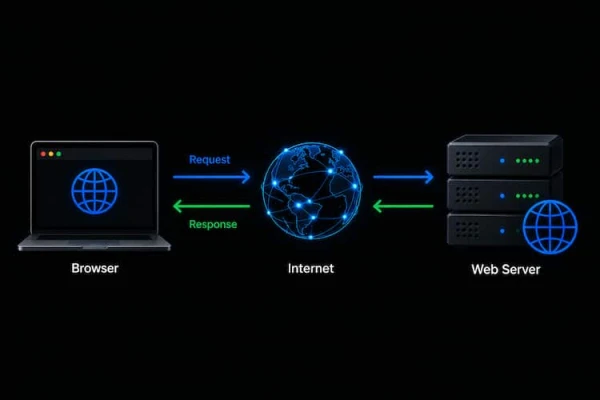
Sometimes, the issue happens when the frontend and backend are not aligned.
For example, the frontend may send a request like this:
fetch('/api/users')But in Laravel, the route is defined like this:
Route::get('/users', [UserController::class, 'index']);👉 Because of this mismatch, Laravel returns a 404 error — even though the route actually exists.
The issue is not that the route is missing — but that it is being called incorrectly.
In some cases, this kind of issue is not just about routes.
Laravel may fail to resolve the controller itself, which leads to errors that look very similar to 404 problems.
👉 If you've seen errors like "Target class does not exist", it usually means Laravel cannot find or resolve your controller correctly.
You can explore this in more detail here: laravel target class does not exist why the controller exists but laravel cannot see it
How to Prevent Laravel 404 Errors

One of the most powerful ways to reduce Laravel 404 errors is to build a clear and consistent internal structure within your application. This means organizing your routes logically, maintaining consistent naming conventions, and ensuring that your controllers and dependencies are properly defined and connected in a way that reflects how Laravel expects the application to function internally. When structure is clear, errors become easier to trace and resolve, and your development process becomes more stable and predictable.
Your existing articles already reflect this approach. For example, your content about Laravel 419 Page Expired – Fix CSRF Error Easily, Laravel 500 Server Error and Laravel 403 Forbidden Error – Causes, Fixes, and What It Really Means shows that you are building a complete understanding of how Laravel handles different types of problems. By connecting these topics together through internal links, you create a stronger knowledge base that helps both you and your readers solve issues more efficiently while improving your SEO structure at the same time.
For example, session-related problems discussed in Laravel Session Expired Error – or authentication issues covered in Laravel Login Not Working can sometimes indirectly affect routing behavior, making a working route appear broken or inaccessible. When you start seeing Laravel as a connected system rather than isolated features, debugging becomes much more intuitive, and you begin to anticipate problems before they happen.
Why Beginners Struggle With Laravel 404 Errors

Beginners often struggle more with Laravel 404 errors not because the problem is harder, but because the mental model is still developing. At the beginning, it is natural to think of Laravel as a collection of files such as routes, controllers, and views. However, Laravel is not just files; it is a dynamic system where everything interacts together, and understanding those interactions takes time and experience.
This is why experiences like the ones you described in What I Wish I Knew About Laravel Before I Started and Starting with Laravel Can Feel Overwhelming are so important. They show that confusion is not a sign of failure, but a necessary part of the learning process. The moment you shift from thinking in isolated pieces to thinking in systems, many errors, including Laravel 404 issues, become easier to understand and resolve with confidence.
Transforming Errors Into Learning Opportunities

Every Laravel 404 error is an opportunity to understand the framework more deeply. Instead of seeing it as a failure, you can treat it as a signal that something in your application’s structure needs attention. This mindset shift is what separates developers who struggle repeatedly from those who grow quickly and build stronger systems over time.
When you combine this understanding with your existing content strategy, you create something even more powerful. You are not just solving problems for yourself, but also documenting them in a way that helps others. This is exactly how strong technical blogs grow, by focusing on real problems, real experiences, and clear explanations that connect different topics together in a meaningful way.
Conclusion: From Confusion to Clarity

Laravel 404 errors are not random, and they are not signs that the framework is broken. They are indicators that something in the request flow, configuration, or application structure needs to be understood more clearly. By learning how Laravel processes requests, how routing connects to controllers, and how the environment affects behavior, you move from guessing solutions to understanding them deeply.
The next time you see a Laravel 404 not found error, instead of feeling stuck, you will know that the answer is not far away. It is somewhere in the structure, waiting to be understood.
👉 In some cases, these issues may even escalate into more serious problems like server failures.
If you're experiencing that, you can read this guide: Laravel 500 Server Error — Why It Happens After Deploy or During Development
And once you find the root cause, you will not just fix the problem — you will become a better developer, building not only working applications but also a deeper understanding of how Laravel truly works.Laravel Routing Errors — Complete Fix Guide
🚀 Quick Fix Checklist
- Check your route definition
- Run
php artisan route:list - Clear route cache
- Verify controller and method
- Check server configuration






































Discussion 0