Understanding Laravel Middleware — How Requests Travel Through Your Application
When developers first start learning Laravel, middleware often feels like one of those concepts that works quietly in the background.
- You see routes.
- You see controllers.
- You see views.
But middleware sits somewhere in between, silently inspecting requests before they reach your application.
Because it works behind the scenes, many beginners underestimate how important middleware really is.
In reality, middleware is one of the most important parts of the Laravel request lifecycle.
Every time a user visits a page, submits a form, logs in, logs out, accesses a protected area, or sends an API request, middleware may be involved.
Understanding middleware helps developers understand how Laravel controls access, applies security rules, manages authentication, and protects applications from invalid requests.
Just like environment configuration shapes how Laravel behaves in different situations, middleware shapes how requests travel through the application. Developers who understand Laravel environments often find middleware easier to understand because both systems influence how requests behave before application logic runs.
What Is Middleware in Laravel?
Middleware acts as a filter between an incoming request and the application.
Before a request reaches a controller, Laravel allows middleware to inspect it.
Middleware can:
- Allow the request
- Modify the request
- Reject the request
- Redirect the user
- Add additional security checks
Think of middleware as a security checkpoint.
A visitor cannot enter the application directly.
Instead, Laravel sends every request through a series of checkpoints that determine whether the request should continue.
This approach keeps application logic clean while centralizing security and validation behavior.
Why Middleware Exists
Without middleware, every controller would need to repeat the same checks.
Imagine an application with hundreds of pages.
Every controller would need to verify:
- Authentication
- Authorization
- CSRF protection
- Maintenance mode
- Request validation
The application would quickly become difficult to maintain.
Middleware solves this problem by separating these responsibilities from business logic.
Instead of placing security checks inside every controller, Laravel allows middleware to handle them once and apply them consistently across the entire application.
This separation is one of the reasons Laravel applications remain organized as they grow.
How a Request Travels Through Laravel
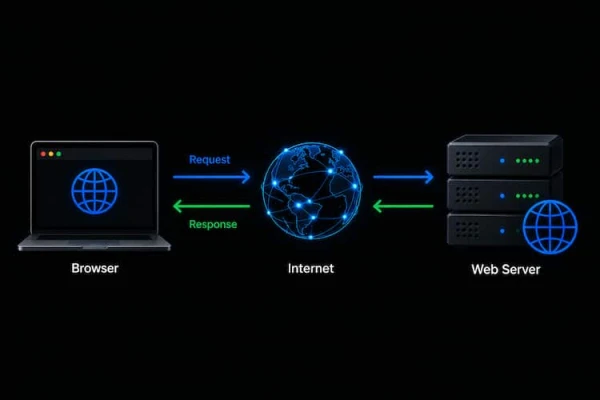
When a user visits a Laravel application, the request follows a journey.
The browser sends a request.
Laravel receives it.
The framework then begins processing the request before any controller is executed.
A simplified flow looks like this:
Request → Middleware → Route → Controller → Response
Many developers assume controllers receive requests immediately.
However, middleware often processes requests first.
This means a request can be stopped long before it reaches your controller.
Authentication checks, CSRF validation, maintenance mode checks, and other security layers may all execute before your application logic runs.
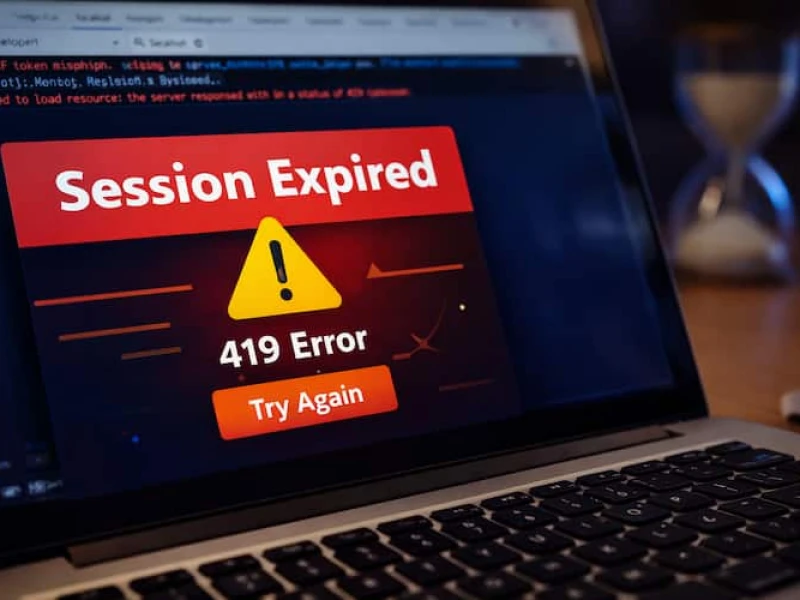
This is one reason why errors such as failed logins, CSRF token mismatches, and 419 Page Expired responses can sometimes feel confusing to beginners. Understanding how middleware processes requests makes these issues much easier to understand and debug.
Understanding this request lifecycle helps explain many behaviors that appear confusing to beginners.
The Middleware Pipeline
Laravel does not typically run only one middleware.
Instead, requests travel through a middleware pipeline.
You can imagine the pipeline as a sequence of checkpoints.
Each middleware receives the request and decides:
- Continue processing
- Modify the request
- Stop the request
If every middleware approves the request, it eventually reaches the controller.
If one middleware rejects the request, Laravel immediately returns a response.
This layered approach creates a powerful and flexible security architecture.
It also explains why a request may never reach a controller even when routes appear correctly configured.
Global Middleware vs Route Middleware
Laravel supports different types of middleware.
Global Middleware
Global middleware executes on every request.
Regardless of which route is visited, the middleware runs automatically.
These middleware often handle:
- Request preparation
- Maintenance mode checks
- Security-related tasks
Because they affect the entire application, global middleware should be used carefully.
Route Middleware
Route middleware only executes when attached to specific routes.
For example:
- Authentication middleware
- Admin access middleware
- Subscription checks
This allows developers to apply specific rules only where needed.
Route middleware provides fine-grained control over application behavior.
Authentication Middleware
Authentication middleware is one of the most commonly used middleware types in Laravel.
Its purpose is simple:
- Determine whether the current user is authenticated.
If the user is logged in:
- Continue processing
If the user is not logged in:
- Redirect to login
- Return an unauthorized response
This prevents unauthorized users from accessing protected pages.
When authentication middleware behaves unexpectedly, developers often encounter problems such as login redirects, failed authentication checks, or session-related issues discussed in Laravel Login Not Working? (Session, CSRF, Redirect Fix Guide)
and
Laravel Session & Authentication Errors — Complete Fix Guide.
Without middleware, every protected controller would need to perform authentication checks manually.
Laravel centralizes this responsibility through middleware.
CSRF Middleware
CSRF protection is another important middleware responsibility.
CSRF stands for Cross-Site Request Forgery.
The goal is to ensure that form submissions originate from trusted sources.
When a form is submitted, Laravel verifies a CSRF token.
If the token is missing or invalid, Laravel rejects the request.
This protection helps prevent malicious websites from submitting requests on behalf of users.
Many developers first encounter this behavior through the famous 419 error discussed in How to Fix the 419 Page Expired Error in Laravel (Beginner-Friendly Guide). Understanding CSRF middleware also makes it easier to understand why authentication and session-related requests sometimes fail unexpectedly.
Although the error may seem frustrating at first, it is actually evidence that Laravel's security systems are working correctly.
Custom Middleware
Laravel also allows developers to create their own middleware.
Custom middleware can enforce business-specific rules.
Examples include:
- Premium membership verification
- Age restrictions
- Subscription validation
- Country restrictions
- Feature access control
Instead of placing these checks inside controllers repeatedly, developers can centralize them inside middleware.
This makes applications easier to maintain and improves code organization.
As projects grow, custom middleware often becomes an essential architectural tool.
Because middleware operates before controllers are executed, developers sometimes spend time debugging routes or controller logic when the real issue exists inside the request pipeline itself. Understanding middleware makes these situations easier to recognize and troubleshoot.
Why Middleware Makes Applications Safer
Security is one of the primary reasons middleware exists.
Middleware creates multiple layers of protection.
It can:
- Verify authentication
- Validate requests
- Enforce permissions
- Protect forms
- Limit access
Without middleware, applications would depend heavily on developers remembering to implement security checks manually.
Middleware reduces that risk.
By applying security policies consistently, Laravel helps developers build safer applications by default.
This security-focused design is one reason Laravel remains popular for both small and large projects.
Common Misunderstandings About Middleware
Middleware Is Not a Controller
Middleware should not contain application business logic.
Its purpose is request handling and filtering.
Controllers should remain responsible for application actions.
Middleware Does Not Replace Authorization
Authentication and authorization are related but different concepts.
Authentication answers:
- "Who is the user?"
- Authorization answers:
- "What is the user allowed to do?"
Middleware often assists with both but does not eliminate the need for proper authorization systems.
Middleware Is Not Only for Security
Although security is a major use case, middleware can perform many other tasks.
Developers often use middleware for:
- Logging
- Localization
- Request modification
- Performance monitoring
- Feature management
Middleware Does Not Automatically Fix Application Problems
Middleware is a tool.
Poorly designed middleware can create complexity just as easily as it can solve problems.
Understanding when and where middleware should be used is an important part of Laravel architecture.
How Middleware Fits Into the Bigger Laravel Picture
Middleware is not an isolated feature.
It interacts closely with:
- Routes
- Controllers
- Sessions
- Authentication
- CSRF protection
- Environment configuration
Many common Laravel issues eventually trace back to one of these systems.
Environment configuration, authentication, sessions, CSRF validation, and middleware frequently work together. Understanding these relationships makes it easier to diagnose problems explored in Understanding Laravel Environment Configuration — How Laravel Thinks Behind the Scenes.
Understanding how middleware fits into the request lifecycle makes debugging significantly easier.
This is especially true when investigating authentication, session, and security-related behavior.
Final Thoughts
Middleware is one of Laravel's most important architectural features because it sits between the incoming request and your application's logic, quietly controlling how every request should be handled. Whether it's checking if a user is authenticated, protecting forms against CSRF attacks, or applying custom business rules, middleware helps keep your application secure, organized, and consistent without cluttering your controllers.
When you're first learning Laravel, middleware can feel like an invisible layer that's difficult to understand. However, once you begin following the path of a request through the framework, its purpose becomes much clearer. Instead of thinking of middleware as another Laravel feature to memorize, it's more helpful to see it as a series of intelligent checkpoints that decide how requests should move through your application.
Understanding middleware is also an important step toward understanding Laravel's overall architecture. Many common issues involving authentication, sessions, request validation, and authorization become much easier to troubleshoot once you know where middleware fits into the request lifecycle. If you run into problems where middleware doesn't behave as expected, our guide on Laravel Middleware Not Working? Complete Fix Guide. explores the most common causes and practical solutions.
Finally, it's worth remembering that middleware is only one part of Laravel's request lifecycle. Before any middleware is executed, Laravel first prepares the entire application by registering and configuring its core services. If you'd like to understand what happens during that startup process, be sure to read Understanding Laravel Service Providers: A Beginner-Friendly Guide, where we explore how Laravel initializes the framework before handling every request.





























Discussion 0