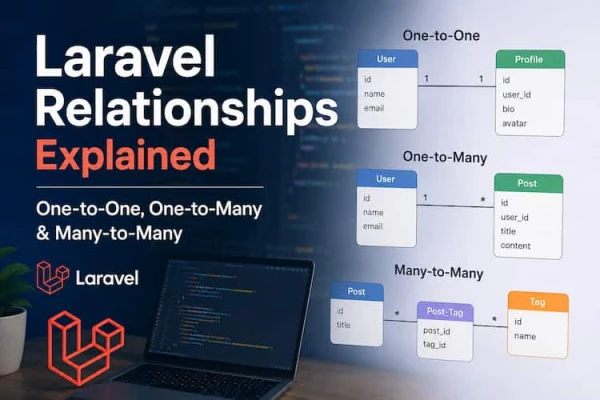
Laravel Relationships Explained One to One One to Many and Many to Many
When I first started learning Laravel, I thought understanding the database meant learning how to create tables, store information, update records, and retrieve them when I needed them. At the beginning, that seemed like enough. If I could create a user, save a post, display an article, or delete something from the database, I felt that I was beginning to understand how Laravel applications worked. But as my projects became more realistic, I discovered that storing information was actually the easy part. The more difficult and much more interesting question was how all that information should be connected.
Think about even a very simple blog application. It might contain users, posts, comments, categories, profiles, and tags. We can create a separate place in the database for each of these things, but that alone does not create a meaningful application. A post is not simply a piece of text sitting somewhere in a database. Someone wrote that post. A comment was written in response to a particular article. A profile belongs to a particular user. A category may contain several articles, and an article may be associated with different tags. The information becomes meaningful because of the connections between it.
This is the idea behind Laravel relationships. Relationships allow Laravel to understand how different pieces of application data belong together. At first, terms such as one-to-one, one-to-many, and many-to-many can sound like complicated database theory. I used to see them as more Laravel terminology that I needed to memorize. Eventually, however, I realized that relationships are not primarily about Laravel. They are about describing the real world inside an application. Once I began looking at them that way, the entire subject became much easier to understand.
Why Relationships Matter More Than They First Appear
A beginner can build a surprisingly large amount of functionality without deeply understanding relationships. You can create forms, routes, controllers, views, migrations, and models while following tutorials and still feel that everything is progressing normally. The difficulty usually appears when the application stops being a collection of simple exercises and begins becoming a real system.
Suppose you are building a website where users can publish articles. You already have users and you already have posts. Now you want to display every article written by one particular user. You also want the author's name to appear next to every article. Later, you introduce comments and want each comment to belong to the correct post. Perhaps you also want to show everything a particular user has commented on. Suddenly, the application needs to understand much more than individual records. It needs to understand how those records are related.
This was an important shift in the way I understood Laravel. Earlier in my learning journey, I often saw routes, controllers, models, migrations, and database tables as separate subjects. I could study each one individually, but I did not always understand how they formed a complete application. I described that experience in The Exact Moment Laravel Started Making Sense to Me, because one of the biggest changes in learning Laravel happens when you stop seeing isolated features and begin seeing a system. Relationships are a perfect example of that change.
A well-designed relationship gives meaning to information. Imagine finding an order in a database without knowing which customer placed it. Imagine finding a comment without knowing which article it belongs to. Imagine having thousands of products without knowing their categories. The individual information may exist, but the application lacks context. Relationships provide that context and allow the different parts of the database to become one connected structure.
Understanding One-to-One Relationships Naturally
The easiest relationship to understand is usually one-to-one. Instead of beginning with technical terminology, imagine a user account and a user profile. The account might contain essential information used by the application, while the profile contains additional information about the person. In a typical application, one user has one profile, and that particular profile belongs to one user.
That is essentially what a one-to-one relationship means. One thing is associated with one other thing.
There are many situations where this type of relationship makes sense. An employee might have one detailed employee profile. A customer account might have one collection of preferences. A person might have one profile containing a biography, picture, and public information. The exact example is less important than understanding the structure. If one record should have one corresponding record on the other side, we are dealing with a one-to-one relationship.
What helped me understand this was realizing that database design should reflect the meaning of the application. We do not separate information into different areas simply because Laravel allows us to do so. We separate information because different pieces of data serve different purposes, and then we create relationships so that the application still understands that they belong together.
This way of thinking becomes increasingly important as applications grow. A small project might survive with everything placed together, but larger projects need structure. Laravel relationships help create that structure without losing the logical connection between different parts of the application.
One-to-Many Is Everywhere in Real Applications
If one-to-one is the easiest relationship to imagine, one-to-many is probably the relationship that beginners will encounter most frequently. Return to our blogging example. A user does not necessarily write only one article. Over time, the same user might publish ten, fifty, or hundreds of articles. Each article still has one author, but one author can have many articles. That is a one-to-many relationship.
The same pattern appears again when comments are introduced. One article can receive many comments, while each individual comment belongs to the article where it was published. A customer can place many orders. A category can contain many products. A teacher may teach many lessons. A company can have many employees. Once you understand what you are looking for, one-to-many relationships appear almost everywhere.
This is why I think relationships are easier to learn through ordinary language than through memorization. Instead of beginning with Laravel terminology, describe the application in a sentence. A user has many posts. A post has many comments. A customer has many orders. A category has many products. Those sentences already contain most of the logic you need to understand the relationship.
There is also an important idea hidden inside one-to-many relationships: ownership. If a post belongs to a user, the application can understand who created it. That becomes important when displaying the author's information, but it becomes even more important when the application needs to make decisions. Should this person be allowed to edit the article? Should this post appear on this user's profile? What should happen to the posts if the account is removed? These questions depend on the application understanding ownership and connections.
This is where relationships begin connecting with other Laravel concepts. Middleware might help control whether someone can access a particular area. Authentication can identify the current user. Validation can make sure submitted information is acceptable. Relationships tell the application how that information is connected. If middleware is still confusing, my article Laravel Middleware Not Working? Complete Fix Guide explains how requests move through middleware before reaching other parts of an application.
Why Many-to-Many Feels More Complicated
Many-to-many was the relationship that initially required the biggest change in the way I thought about data. It becomes much easier when we use an example such as articles and tags. Imagine publishing an article about Laravel authentication. That article could belong to several tags, perhaps Laravel, PHP, Authentication, and Security. Therefore, one article can have many tags.
Now look at the relationship from the other direction. The Laravel tag does not belong exclusively to that one article. You might publish many Laravel articles, and all of them could use the same Laravel tag. The Security tag might also appear on many different articles. Therefore, one tag can be connected to many posts, while one post can also be connected to many tags.
That is the essential meaning of many-to-many.
The same idea appears outside blogging. One student can attend several courses, while each course contains many students. One actor can appear in many movies, while one movie can feature many actors. One product can appear in many orders, while one order can contain many products. Neither side is limited to a single connection.
The reason this relationship can initially feel more difficult is that ownership is less obvious. With users and posts, we can naturally say that the post belongs to its author. With posts and tags, neither side really owns the other. They are associated. Laravel and the database need a way to remember those associations, which is why many-to-many relationships require an additional connecting structure behind the scenes.
You do not need to memorize the technical implementation immediately to understand the concept. The most important question is whether both sides can have multiple connections. If the answer is yes, you are probably looking at a many-to-many relationship.
Relationships Change How You Think About Database Design
One of the most valuable lessons I learned from relationships was that database design should begin before creating tables. Earlier, I could easily think, “I need users, posts, comments, categories, and tags,” and then immediately begin building them. But listing the types of information in an application is only the first step. The more important step is deciding how those pieces of information interact.
Does every user have one profile or can they create several? Can a post belong to one category or multiple categories? Can several users manage the same project? Can a product appear in several collections? Can one customer have several addresses? The answers to these questions influence the entire structure of the application.
This is also why learning relationships helps you become better at application development rather than simply better at remembering Laravel features. You begin thinking about architecture. Before creating something, you consider what it represents, what it belongs to, what can belong to it, and how the application will use those connections later.
Relationships therefore encourage you to think beyond the current page or feature. A decision that seems small when the application has twenty records can become extremely important when it contains thousands. Good relationships give the application a structure that can grow with it.
From Simple CRUD to a Connected Application
CRUD projects are often where Laravel beginners first begin working seriously with databases. Creating, reading, updating, and deleting information teaches many essential skills, but relationships are what make CRUD applications begin to feel real.
Imagine an application that allows you to create articles. Without relationships, creating an article means simply storing a title and content. Once users are introduced, creating an article means creating something that belongs to an author. Add comments, and those comments belong to the article. Add categories and tags, and the same article becomes connected to other parts of the website.
The application is no longer simply performing CRUD operations. It is managing a network of connected information.
That was one of the lessons I encountered while learning through practical projects. In My First CRUD in Laravel: From Beginner to Builder, I explained how building something yourself changed my understanding because real projects force you to answer questions that are easy to avoid while following tutorials. Relationships are one of those questions. As soon as your application contains several types of information, you have to decide how they belong together.
Relationships Give Data Meaning
There is a deeper reason relationships matter that is easy to overlook when we concentrate only on Laravel. Information without context has limited value.
Imagine seeing a database record containing the sentence, “This helped me solve my problem.” It could be a perfectly valid comment, but without knowing which article received the comment or which user wrote it, much of its meaning disappears.
The same applies to an order without a customer, a message without a sender, a review without a product, or an article without an author. The information itself exists, but we cannot properly understand its place inside the application.
Relationships provide that missing context. They transform separate pieces of information into a system where each record can have a meaningful connection to other records. This is why understanding Laravel Eloquent relationships eventually becomes essential for anyone who wants to build applications beyond basic exercises.
Relationships Also Make Validation More Important
As information becomes connected, protecting its quality becomes more important. In a very small application, one incorrect piece of information may seem harmless. In a larger application, bad data can affect many connected areas.
Imagine associating a comment with an article that does not exist, connecting information to the wrong user, or accepting values that should never have entered the database. Relationships can only remain reliable when the application also protects the information entering the system.
This is where validation becomes part of the same larger picture. Relationships determine how information connects, while validation helps determine whether incoming information is acceptable before it becomes part of those connections. I explain this concept more deeply in Laravel Validation Explained: How Laravel Protects Your Application from Invalid Data, which shows why validation is much more than displaying error messages underneath a form.
As you learn more Laravel features, you begin discovering this pattern repeatedly. Concepts that seemed unrelated at first are actually dependent on each other.
Stop Memorizing and Start Asking Questions
A common beginner mistake is trying to memorize Laravel relationship terminology before understanding the application itself. I did this with many Laravel concepts. When something looked technical, my first reaction was often to remember the name, syntax, or rule. The problem is that memorized information disappears quickly when you do not understand why it exists.
Relationships become easier when you start with questions instead.
Can one user have several profiles, or should there only be one? Can one user publish several posts? Can one post have several tags? Can one tag belong to several posts? Can a customer make multiple orders? Can an order contain multiple products?
These questions force you to understand the application before thinking about Laravel.
If one thing connects to one other thing, think about one-to-one. If one thing can connect to several things while each of those belongs back to one main record, think about one-to-many. If both sides can have several connections, think about many-to-many.
The terminology becomes much easier once the underlying idea is clear.
Seeing Laravel as One Connected System
Understanding relationships eventually taught me something much larger than database design. It reinforced the idea that Laravel works as a connected system.
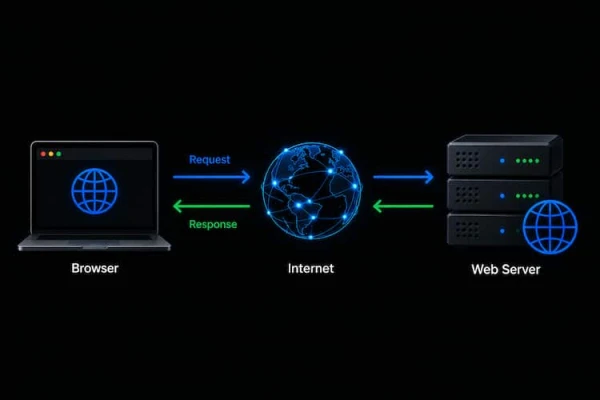
A request enters the application and finds the appropriate route. Middleware may examine that request. A controller determines what should happen. Validation can inspect incoming information. Models represent application data. Relationships explain how that data connects. Sessions and authentication can help the application remember and identify users. Views finally present information back to the person using the application.
When you first learn Laravel, these concepts arrive separately, which is one reason the framework can feel overwhelming. I wrote about that experience in Starting with Laravel Can Feel Overwhelming. The difficulty is not always that each individual Laravel feature is complicated. Sometimes the real difficulty is that you have not yet seen how everything fits together.
Relationships help reveal that bigger picture because they force us to stop thinking about individual pieces and start thinking about connections.
Frequently Asked Questions
What are relationships in Laravel?
Laravel relationships describe how models and database records are connected, such as users with posts or posts with comments.
What are the main Laravel relationships?
The most common types are one-to-one, one-to-many, and many-to-many relationships.
What is a one-to-one relationship?
A one-to-one relationship connects one record to one other record, such as a user and one profile.
What is a one-to-many relationship?
A one-to-many relationship means one record can have several related records, such as one user having many posts.
What is a many-to-many relationship?
A many-to-many relationship allows multiple records on both sides to connect, such as posts having many tags and tags belonging to many posts.
What is the difference between one-to-many and many-to-many?
In one-to-many, only one side has multiple related records. In many-to-many, both sides can have multiple connections.
Why are Laravel Eloquent relationships important?
They help organize connected data and make Laravel applications easier to understand and manage.
Which Laravel relationship should beginners learn first?
One-to-many is usually the best place to start because it appears frequently in real Laravel applications.
Final Thoughts
Laravel relationships can look intimidating when you first encounter terms such as one-to-one, one-to-many, and many-to-many. But beneath those technical names lies a very simple idea: information in real applications is connected.
A user can have a profile. A user can write many posts. A post can receive many comments. A post can have several tags, and those tags can belong to many other posts. Customers place orders, products belong to categories, messages have senders and receivers, and reviews belong to products. Applications become useful because these pieces of information do not exist in isolation—they work together.
For me, understanding relationships was another step away from simply memorizing Laravel syntax and toward understanding how real applications are designed. Instead of seeing a database as a collection of unrelated tables, I started seeing a structure where every piece of information has a purpose and a connection to something else.
That is the true value of learning Laravel relationships. The goal is not to memorize relationship types, but to understand your data well enough that choosing the correct relationship becomes natural. Once that happens, concepts such as one-to-one, one-to-many, and many-to-many stop feeling like database terminology and begin to describe the real-world connections inside your application.
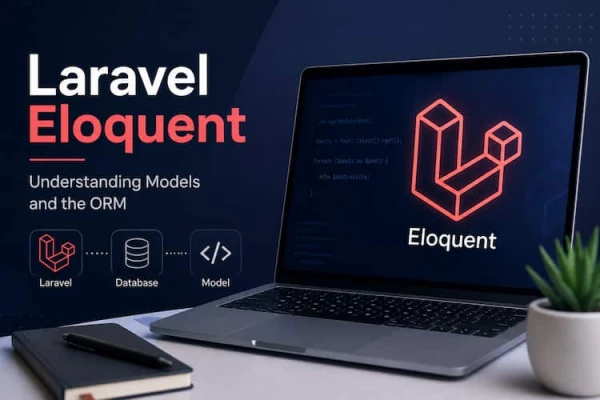
As you continue learning Laravel, you'll discover that relationships are only one part of a much bigger ecosystem. Before working with relationships, it's worth understanding how Laravel Eloquent and models communicate with your database. Likewise, although Eloquent relationships feel effortless to use, Laravel prepares the underlying services before any model is ever created. If you'd like to understand what happens behind the scenes, be sure to read Understanding Laravel Service Providers: A Beginner-Friendly Guide, where we explore how Laravel initializes the framework before every request.






























Discussion 0